Have you ever seen a friend post exciting vacation photos, a viral event pop up on social media, or a group chat buzzing with plans you weren’t part of? If so, you may have experienced something called FOMO.
The phrase FOMO meaning in text is one of the most searched internet slang terms today. People frequently come across it in text messages, social media posts, online conversations, and even workplace discussions.
Yet many still wonder what it actually means and why it has become so popular. In simple terms, FOMO describes the feeling that something exciting, important, or enjoyable is happening without you.
It’s a modern emotion that many people experience, especially in today’s digitally connected world. Understanding FOMO isn’t just about learning internet slang.
It helps you recognize common emotions, improve digital awareness, and better understand how people communicate online.
Whether you’re a student, parent, professional, or social media user, knowing what FOMO means can help you connect more effectively with modern conversations.
What Does FOMO Mean?
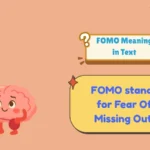
FOMO stands for Fear Of Missing Out.
When someone uses FOMO in a text message, they are expressing anxiety, concern, or curiosity about missing an event, opportunity, experience, or social interaction.
Rather than being a complicated psychological term, FOMO is often used casually in everyday conversations.
For example:
- Your friends are attending a concert while you’re at home.
- Everyone in your office is discussing a meeting you missed.
- A social media trend is spreading rapidly, and you feel left behind.
In each situation, the feeling of wanting to be included is what people describe as FOMO.
Real-Life Examples
Imagine scrolling through social media and seeing everyone attending a festival while you’re studying for exams. You might think:
I’m getting serious FOMO right now.
Or perhaps your coworkers go out for lunch without you, and you jokingly text:
You guys are giving me FOMO!
These examples show how naturally the term fits into daily communication.
Origin and Background of the Term
The story of FOMO is surprisingly interesting.
Although people have always worried about missing important events, the acronym FOMO became popular during the early 2000s. As social media platforms expanded, users gained constant access to updates about other people’s lives.
Before smartphones, you might not know what your friends were doing every minute of the day. But platforms like Facebook, Instagram, Snapchat, and TikTok changed that completely.
Suddenly, people could see parties, vacations, celebrations, and achievements in real time.
Researchers and psychologists began discussing how constant exposure to others’ experiences could create feelings of exclusion and anxiety. Around the same time, internet users started using the shorthand FOMO in online discussions.
What began as a niche internet term quickly became a mainstream expression used around the world.
Today, FOMO appears in marketing campaigns, business discussions, mental health articles, and everyday text messages.
How FOMO Is Used in Daily Life
FOMO appears in countless situations.
Here are some practical examples:
1. Social Events
A friend posts photos from a party you couldn’t attend.
You text:
I’m having major FOMO seeing these pictures.
2. Travel Experiences
Everyone seems to be visiting exciting destinations.
You might think:
All these travel posts are giving me FOMO.
3. Limited-Time Offers
A company announces a sale ending tonight.
Customers often experience FOMO and rush to buy before the opportunity disappears.
4. Group Chats
Friends make plans while you’re offline.
You return later and feel like you missed important conversations.
5. Trending Topics
Everyone is discussing a new movie, game, or event.
You watch or join simply because you don’t want to feel left out.
6. Career Opportunities
Professionals sometimes feel FOMO when colleagues attend conferences, workshops, or networking events.
In each case, the core idea remains the same: the fear of missing something valuable.
Emotional or Practical Meaning of FOMO
FOMO is more than internet slang. It reflects a genuine human emotion.
Humans naturally seek connection, belonging, and participation. Throughout history, being part of a community increased survival and social support.
Today, those instincts still exist.
When people experience FOMO, they often feel:
- Curious
- Left out
- Excited
- Anxious
- Motivated to participate
Interestingly, FOMO isn’t always negative.
Sometimes it encourages people to explore new opportunities, meet new friends, or try exciting experiences.
However, excessive FOMO can become stressful if someone constantly compares their life to others online.
This is why understanding FOMO helps create healthier relationships with social media and technology.
Similar or Related Terms
Several expressions are closely related to FOMO.
- YOLO (You Only Live Once) – Encourages taking opportunities and enjoying life.
- JOMO (Joy Of Missing Out) – The opposite of FOMO; enjoying your own time without feeling pressured.
- OMO (Opportunity Missing Out) – Fear of losing a valuable opportunity.
- Peer Pressure – Influence from others to participate in activities.
- Social Anxiety – Concern about social situations and acceptance.
- Digital Overload – Feeling overwhelmed by constant online activity.
While these terms overlap, FOMO specifically focuses on the fear of being excluded from experiences.
Common Misunderstandings About FOMO
Many people misunderstand what FOMO actually means.
Misconception 1: FOMO Only Happens on Social Media
Not true.
People can experience FOMO in schools, workplaces, families, and social groups.
Misconception 2: FOMO Is Always Negative
Not necessarily.
It can sometimes motivate positive action and participation.
Misconception 3: Only Young People Experience FOMO
People of all ages experience it.
Adults often feel FOMO regarding careers, investments, travel, and social opportunities.
Misconception 4: FOMO Means Jealousy
They’re different emotions.
Jealousy involves wanting what someone else has, while FOMO focuses on missing experiences.
Misconception 5: FOMO Is Just Internet Slang
Although it became popular online, psychologists and researchers also study it seriously.
Misconception 6: Everyone Experiences FOMO the Same Way
People react differently depending on personality, lifestyle, and circumstances.
Examples of FOMO in Sentences
Here are some natural examples you might hear:
- I’m feeling FOMO after seeing everyone’s vacation photos.
- Don’t post any more concert videos—my FOMO is getting worse.
- I bought tickets because I didn’t want to experience FOMO later.
- Seeing my friends together gave me a little FOMO.
- That limited-time deal creates serious FOMO among shoppers.
- Everyone is talking about the new show, and my FOMO convinced me to watch it.
- I skipped the event, but surprisingly I didn’t have any FOMO.
- Her social media updates always trigger a bit of FOMO.
Why Understanding FOMO Matters Today
Modern life is more connected than ever before.
Every day, people receive notifications, updates, videos, messages, and news from around the world. While this connectivity has many benefits, it also creates constant opportunities for comparison.
Understanding FOMO helps people:
- Recognize emotional triggers.
- Build healthier social media habits.
- Improve mental well-being.
- Understand online conversations.
- Communicate more effectively.
- Make intentional decisions rather than reacting emotionally.
For example, if you recognize that you’re experiencing FOMO, you may pause and ask yourself whether you genuinely want to participate or whether you’re simply reacting to social pressure.
This awareness can lead to better choices and greater satisfaction.
As digital communication continues evolving, knowing the meaning of FOMO becomes increasingly valuable.
FAQs:
What does FOMO mean in simple words?
FOMO means Fear Of Missing Out. It describes the feeling that other people are enjoying experiences, opportunities, or events that you’re not part of.
Is FOMO positive or negative?
FOMO can be both. It may motivate people to try new experiences, but excessive FOMO can also cause stress, anxiety, and unnecessary comparison.
Where is FOMO commonly used?
FOMO is commonly used in text messages, social media posts, online forums, workplace discussions, marketing campaigns, and everyday conversations.
Is FOMO formal or informal?
FOMO is generally considered an informal term. However, it is also widely discussed in psychology, business, and media contexts.
Why do people search for FOMO meaning in text?
People search for the phrase because they frequently encounter FOMO in messages, social media posts, comments, and online conversations and want to understand its meaning and usage.
Conclusion:
The term FOMO meaning in text refers to the Fear Of Missing Out, a feeling that many people experience in today’s fast-paced and connected world.
Whether it’s a social event, travel opportunity, trending topic, or limited-time offer, FOMO reflects our natural desire to stay connected and involved.
By understanding what FOMO means, where it comes from, and how it’s used, you can better navigate online communication and recognize the emotions behind modern conversations.

Sahil Moosa is a passionate content creator and digital enthusiast with a strong focus on delivering clear, engaging, and trustworthy information. With a keen eye for detail and a commitment to quality, Sahil Moosa believes in creating content that not only informs but also adds real value to readers.
Driven by curiosity and continuous learning, Sahil Moosa enjoys exploring new ideas, trends, and insights across various topics. His goal is to present well-researched content in a simple, reader-friendly way, making complex ideas easy to understand.