Have you ever received a text message with a short abbreviation and wondered what the person actually meant? Online conversations are full of shortcuts, slang, and new expressions that can sometimes feel confusing.
One such term people often see in chats is LWK. If you’re searching for the LWK meaning in text, you’re not alone.
Many people come across this abbreviation on social media, messaging apps, and casual conversations and want to understand its real meaning.
In most texting situations, LWK means lowkey. It is used when someone wants to express something in a subtle, quiet, or slightly hidden way.
Instead of making a strong statement, a person uses LWK to show a personal feeling or opinion without sounding too direct.
Understanding these short forms matters because digital communication is changing quickly. Knowing what people mean behind these words helps you avoid misunderstandings and communicate more naturally online.
What Does LWK Mean in Text?
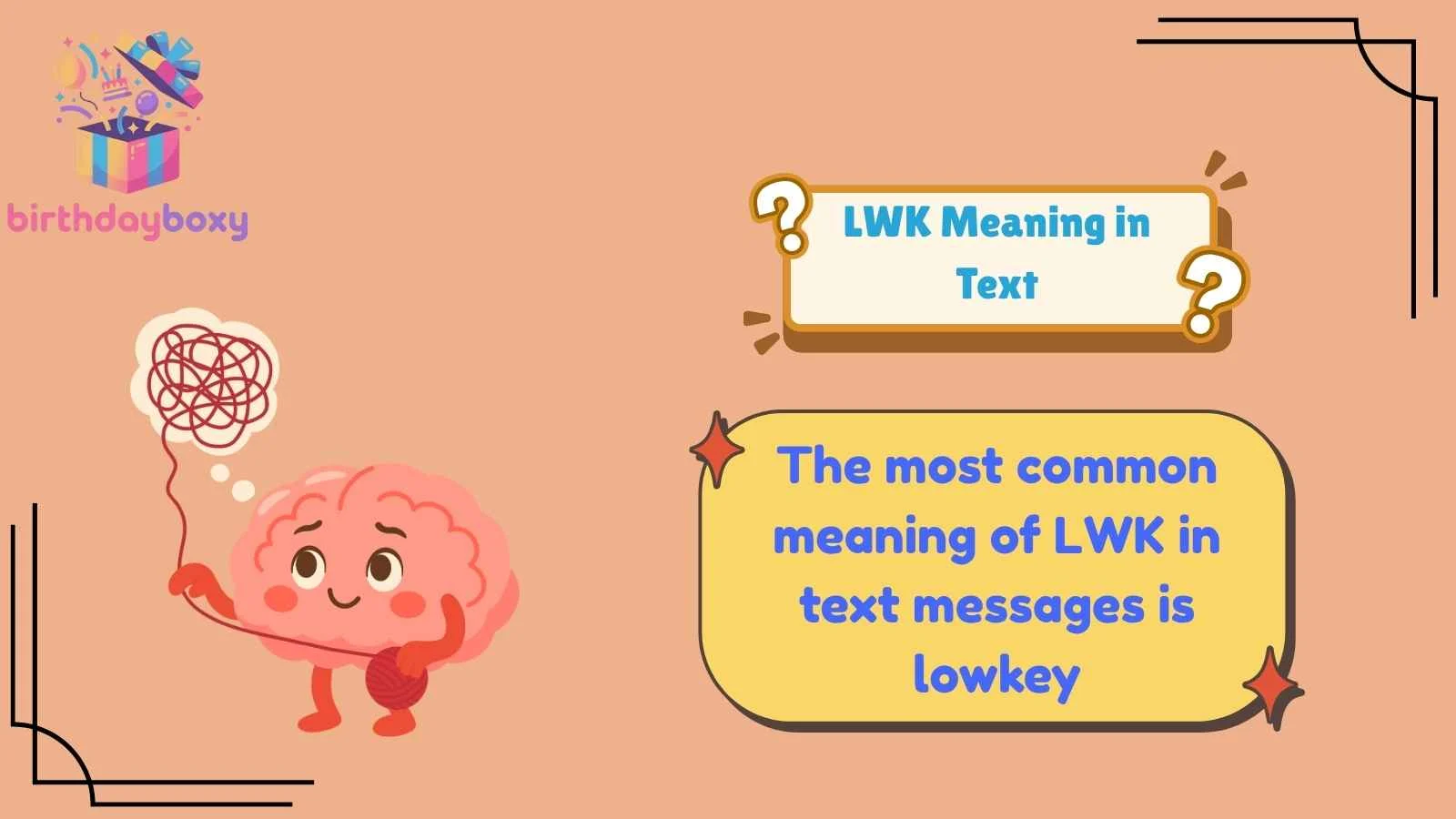
The most common meaning of LWK in text messages is lowkey. It comes from the phrase low key, which means something is done quietly, secretly, or without attracting too much attention.
People use LWK when they want to share a thought or feeling in a relaxed way.
For example:
- LWK I love this song.
This means: I quietly admit that I really love this song.
- I’m LWK excited for the trip.
This means: The movie was actually amazing, even if I’m not making a big deal about it.
The word adds a feeling of honesty and casual expression. It’s often used when someone doesn’t want to sound overly emotional or dramatic.
Origin and Background of the Term
The term lowkey originally came from everyday English. The phrase was used to describe something calm, private, or not highly noticeable.
Over time, especially with the growth of internet culture, social media, and texting, lowkey became a popular slang expression.
Young internet users started using lowkey to describe hidden feelings, small opinions, or things they liked but didn’t want to announce loudly.
For example, someone might say:
I lowkey enjoy rainy days.
They are not saying they are obsessed with rain. They are simply admitting a personal preference.
As texting became faster, people shortened the phrase into abbreviations like LWK. This is common in digital communication, where users often reduce words to save time.
The evolution of LWK shows how language changes with technology. New generations create shorter, easier ways to express emotions and ideas.
How LWK Is Used in Daily Life
People use LWK in many casual conversations. Here are some common examples:
1. Sharing a hidden opinion
I LWK think he’s funny.
Meaning: I secretly think he’s funny.
2. Talking about feelings
I’m LWK nervous about tomorrow.
Meaning: I’m a little nervous but not saying it loudly.
3. Giving a soft compliment
Your outfit is LWK nice.
Meaning: Your outfit is actually nice.
4. Expressing a personal preference
I LWK prefer the old version.
Meaning: I quietly prefer the old one.
5. Admitting something unexpected
I LWK miss those days.
Meaning: I secretly miss those days.
6. Casual reactions online
LWK this is the best one.
Meaning: Honestly, this might be the best one.
LWK is mostly used in informal conversations with friends, online communities, and social media platforms.
Emotional or Practical Meaning of LWK
The meaning of LWK is not only about the words lowkey. It also carries an emotional tone.
When someone says LWK, they often communicate a feeling of honesty, hesitation, or a quiet confession.
For example:
I LWK like you.
This sounds softer than:
I like you.
The abbreviation creates a more relaxed feeling. It allows people to share thoughts without making them feel too serious.
In modern online communication, people often use LWK because emotions can be difficult to express through text. A small abbreviation can make a message feel more natural and personal.
It creates a sense of connection because the person is sharing something they may not openly announce.
Similar or Related Terms
- Lowkey – A quiet or subtle feeling or opinion.
- Highkey – The opposite of lowkey; something openly or strongly expressed.
Example:
I highkey love this movie.
Meaning: I really love this movie.
- TBH (To Be Honest) – Used when sharing an honest opinion.
- Honestly – A direct way to introduce a truthful thought.
- IMO (In My Opinion) – Used when sharing personal views.
- Secretly – Similar to lowkey but usually implies something hidden.
The difference is that LWK often sounds casual and playful, while secretly can sound more serious.
Common Misunderstandings About LWK
1. LWK always means someone is hiding something
Not exactly. It usually means someone is expressing something quietly, not necessarily keeping a secret.
2. LWK is only used by teenagers
While it is popular among younger internet users, many people use online slang in casual conversations.
3. LWK has a negative meaning
No. It can express positive, negative, or neutral feelings depending on the sentence.
Example:
LWK worried.
Negative feeling.
LWK amazing.
Positive feeling.
4. LWK and lowkey have completely different meanings
They mean the same thing. LWK is simply a shortened texting version.
5. LWK can be used in formal writing
Usually no. It is better suited for casual chats, comments, and messages.
6. Everyone understands LWK
Not always. Since slang changes quickly, some people may not know the meaning.
Examples of LWK in Sentences
- I LWK want to travel this year.
- That restaurant is LWK underrated.
- I LWK miss our old conversations.
- She is LWK one of the best players.
- I LWK enjoyed that movie more than expected.
- This song is LWK addictive.
- I LWK agree with your idea.
- He LWK made my day better.
These examples show how LWK makes conversations sound more casual and friendly.
Why Understanding LWK Meaning Matters Today
Internet language is constantly changing. New abbreviations appear every day, and understanding them helps people communicate better.
Knowing the LWK meaning in text can help you understand conversations with friends, online posts, comments, and messages.
For businesses, content creators, and social media users, understanding modern language trends is also valuable. It helps them connect with audiences in a more natural way.
Language is not fixed. It grows with culture, technology, and the way people interact.
A simple abbreviation like LWK shows how people create new ways to express emotions quickly.
FAQs:
What does LWK mean in simple words?
LWK means lowkey in text messages. It describes something someone feels or thinks quietly, casually, or secretly.
Is LWK positive or negative?
LWK can be either positive or negative. The meaning depends on the sentence and situation.
Where is LWK commonly used?
LWK is commonly used in text messages, social media comments, online chats, and casual conversations.
Is LWK formal or informal?
LWK is informal slang. It is best used with friends or in relaxed online communication, not professional writing.
Why do people search for LWK meaning?
People search for LWK meaning because online slang changes quickly, and many want to understand what others mean in messages.
Does LWK mean something different over time?
Internet slang can change as culture evolves. While LWK currently means lowkey in most texting situations, meanings can shift in different communities.
Conclusion:
The LWK meaning in text is simple: it usually stands for lowkey, a casual way to express a quiet feeling, opinion, or reaction.
This small abbreviation has become part of modern digital communication because people want faster and more natural ways to share emotions.
Whether you see it in a message, comment, or social media post, understanding LWK helps you connect better with today’s online conversations.

Sahil Moosa is a passionate content creator and digital enthusiast with a strong focus on delivering clear, engaging, and trustworthy information. With a keen eye for detail and a commitment to quality, Sahil Moosa believes in creating content that not only informs but also adds real value to readers.
Driven by curiosity and continuous learning, Sahil Moosa enjoys exploring new ideas, trends, and insights across various topics. His goal is to present well-researched content in a simple, reader-friendly way, making complex ideas easy to understand.