Have you ever received a text message that included TS and found yourself wondering what it meant? You’re not alone.
Modern texting is filled with abbreviations, slang, and shortcuts that can sometimes feel like a completely different language.
The phrase TS meaning in text has become a popular search because people encounter it across social media, messaging apps, online forums, and casual conversations.
Depending on the context, TS can have different meanings, which often creates confusion. Understanding internet slang isn’t just about keeping up with trends.
It helps you communicate more clearly, avoid misunderstandings, and stay connected in today’s digital world.
Whether you’re chatting with friends, reading social media comments, or texting family members, knowing what TS means can make conversations much easier to follow.
In this guide, you’ll discover the meaning of TS in text, where it came from, how people use it, common misconceptions, and why understanding it matters today.
What Does TS Meaning in Text Mean?
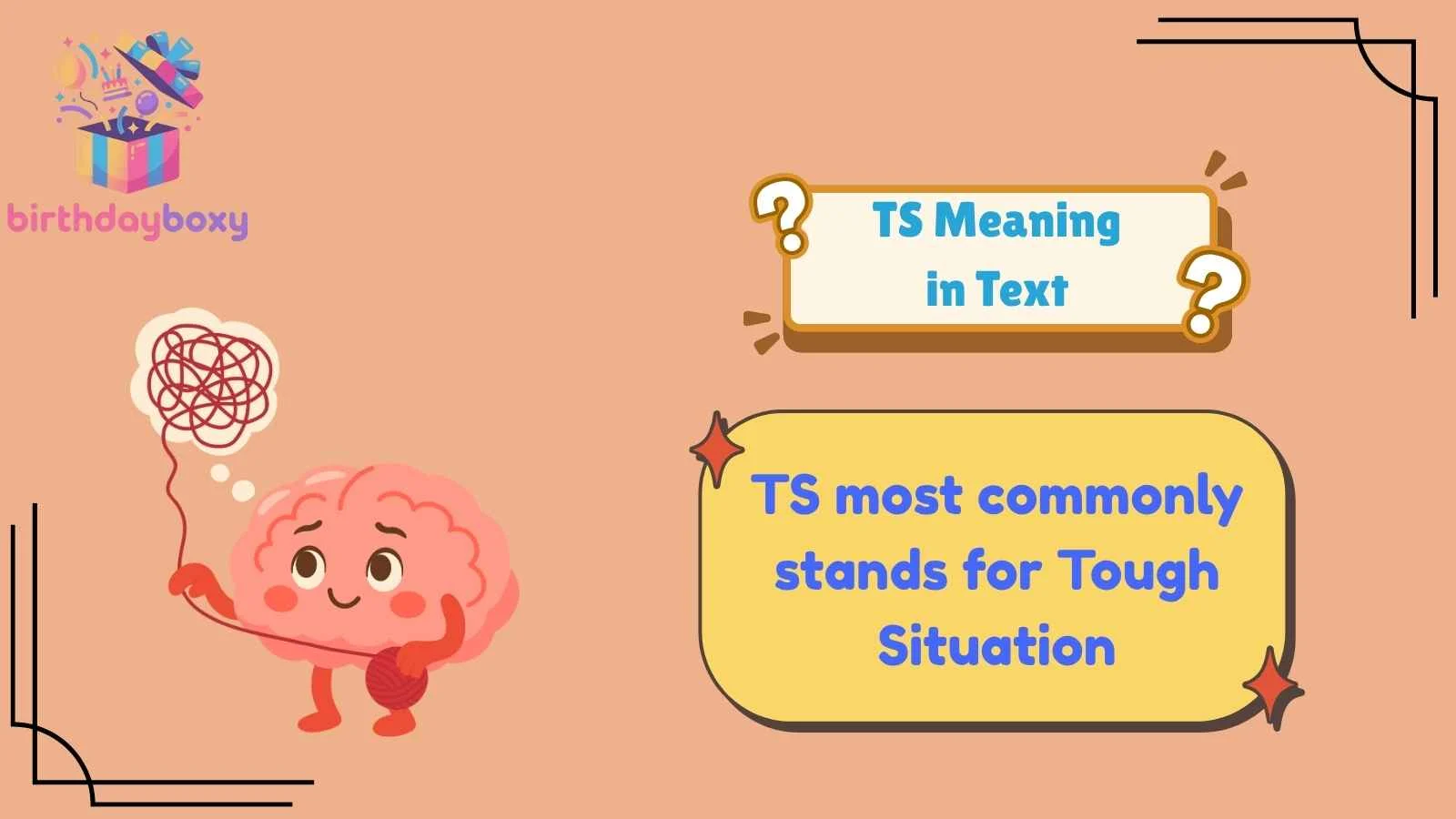
In texting and online communication, TS most commonly stands for Tough Situation or That Sucks.
People often use it when responding to unfortunate news or expressing sympathy for someone’s problem.
For example:
- I failed my driving test.
- TS, you’ll get it next time.
In another conversation:
- My flight got canceled.
- TS. Hope things work out.
However, context matters. In different communities or conversations, TS can have alternative meanings. That’s why understanding the surrounding message is important.
Think of TS as a shortcut that allows people to react quickly in casual digital conversations.
Origin and Background of the Term
The rise of abbreviations like TS can be traced back to the early days of internet chat rooms and text messaging.
Years ago, mobile phones had character limits, and typing long messages was inconvenient. People naturally began shortening common phrases into quick abbreviations. Terms such as LOL, BRB, IMO, and TS became part of online culture.
As social media platforms expanded, these shortcuts spread rapidly among different age groups and communities.
Imagine a teenager in the early 2000s trying to send messages on a phone keypad where every letter required multiple button presses. Shortening phrases wasn’t just trendy—it was practical.
Over time, TS became one of many internet abbreviations used to express emotions, reactions, and opinions quickly.
Today, the term continues evolving as different online communities assign slightly different meanings depending on context.
How TS Is Used in Daily Life
People use TS in many everyday digital interactions.
Expressing Sympathy
When someone shares bad news:
- I lost my wallet.
- TS. Hopefully you find it.
Responding to Frustration
When a friend has a difficult day:
- My boss made me stay late.
- TS.
Casual Social Media Comments
Users may comment TS on posts discussing unfortunate situations.
Gaming Communities
Players sometimes use TS when teammates encounter setbacks or losses.
Group Chats
Friends often use TS as a quick reaction rather than typing a full sentence.
Online Forums
Discussion boards frequently feature abbreviations like TS to keep conversations concise.
Because texting moves quickly, short responses like TS fit naturally into digital communication.
Emotional or Practical Meaning of TS
At first glance, TS might seem like just another internet abbreviation. However, it carries both emotional and practical value.
Emotionally, it can communicate sympathy, understanding, or acknowledgment. When someone shares a disappointing experience, a simple TS can signal that you recognize their frustration.
Practically, it saves time.
Modern communication often happens at a rapid pace. People juggle work, family responsibilities, social media, and countless notifications throughout the day. Abbreviations help simplify communication without requiring lengthy responses.
The emotional impact depends heavily on tone and context.
For some people, TS feels supportive.
For others, especially if used carelessly, it may seem dismissive.
That’s why understanding the relationship between participants is important when using internet slang.
Similar or Related Terms
Several other abbreviations share similarities with TS.
- LOL – Means Laugh Out Loud.
- BRB – Means Be Right Back.
- IMO – Means In My Opinion.
- SMH – Means Shaking My Head.
- TBH – Means To Be Honest.
- IDK – Means I Don’t Know.
- IKR – Means I Know, Right?
How They Differ
TS is usually connected to reactions involving disappointment or unfortunate situations.
LOL focuses on humor.
SMH expresses disapproval or disbelief.
TBH introduces honesty or personal opinion.
Understanding these differences helps you use each abbreviation appropriately.
Common Misunderstandings About TS
Many people misunderstand TS because abbreviations often have multiple meanings.
Misconception 1: TS Always Means One Thing
Not true.
Different communities may use TS differently depending on context.
Misconception 2: TS Is Always Negative
While it’s often connected to unfortunate situations, the intention may simply be empathy or acknowledgment.
Misconception 3: TS Is Formal Language
TS is generally considered informal internet slang.
Misconception 4: Everyone Understands It
Many users, especially older generations or people unfamiliar with online slang, may not recognize the abbreviation.
Misconception 5: TS Is Appropriate Everywhere
Professional emails and formal documents usually aren’t the right places for texting abbreviations.
Misconception 6: Context Doesn’t Matter
Context is actually the key factor in determining the intended meaning.
Examples of TS in Sentences
Here are some natural examples of TS used in everyday communication:
- My laptop stopped working before my presentation. TS.
- I missed the concert tickets by five minutes. TS.
- My package got delayed again. TS, that’s frustrating.
- TS, but you’ll have another chance next week.
- I spent hours on the project and accidentally deleted it. TS.
- TS, I know how disappointing that feels.
- The weather ruined our vacation plans. TS.
- TS, but don’t give up.
These examples show how people commonly use the abbreviation in casual conversations.
Why Understanding TS Matters Today
Digital communication plays a major role in everyday life.
From messaging apps to social media platforms, people communicate using abbreviations more than ever before. Understanding terms like TS helps you navigate these conversations confidently.
It also improves communication across generations.
Parents, students, professionals, and social media users all encounter internet slang in different contexts. Knowing what common abbreviations mean reduces confusion and helps conversations flow naturally.
Additionally, understanding online language can improve digital literacy.
Just as learning vocabulary helps you understand books, learning internet slang helps you understand online culture.
Language constantly evolves.
New terms appear every year, while older expressions sometimes fade away. Staying informed allows you to communicate effectively in modern digital spaces.
FAQs:
What does TS mean in simple words?
In simple words, TS often means That Sucks or refers to a Tough Situation. It’s commonly used to react to unfortunate news or disappointing experiences.
Is TS positive or negative?
TS is usually associated with negative situations because it’s often used when discussing problems, frustrations, or bad luck. However, it can also express sympathy and support.
Where is TS commonly used?
TS is commonly used in text messages, social media comments, online forums, gaming communities, and group chats.
Is TS formal or informal?
TS is generally informal. It’s best suited for casual conversations rather than professional emails, business reports, or academic writing.
Why do people search for TS meaning in text?
People search for TS meaning in text because abbreviations can have multiple interpretations. As online language changes over time, many users want to understand what others mean in digital conversations.
Conclusion:
The TS meaning in text may seem simple, but understanding it can make online conversations much easier to follow.
Most commonly, TS stands for That Sucks or refers to a Tough Situation, helping people express sympathy, acknowledgment, or reaction to unfortunate events.
As digital communication continues to evolve, abbreviations like TS remain an important part of everyday language.
Learning these expressions helps you stay informed, communicate effectively, and understand modern online culture.

Sahil Moosa is a passionate content creator and digital enthusiast with a strong focus on delivering clear, engaging, and trustworthy information. With a keen eye for detail and a commitment to quality, Sahil Moosa believes in creating content that not only informs but also adds real value to readers.
Driven by curiosity and continuous learning, Sahil Moosa enjoys exploring new ideas, trends, and insights across various topics. His goal is to present well-researched content in a simple, reader-friendly way, making complex ideas easy to understand.