Have you ever received a text that simply said WTW? and found yourself wondering what it meant? You’re not alone.
Modern texting is full of abbreviations, slang, and shortcuts that can leave people confused, especially when new terms seem to appear overnight.
One of the most common expressions you might see in messages, social media chats, or online conversations is WTW meaning in text.
While it looks like just three random letters, it actually carries a simple and useful meaning that helps people start conversations quickly.
Understanding texting slang isn’t just about keeping up with trends. It’s also about communicating clearly and avoiding misunderstandings.
Whether you’re chatting with friends, connecting on social media, or simply curious about internet language, learning what WTW means can help you feel more confident in modern digital conversations.
In this guide, you’ll discover the meaning of WTW, where it came from, how people use it, common misconceptions, and practical examples you can use in everyday communication.
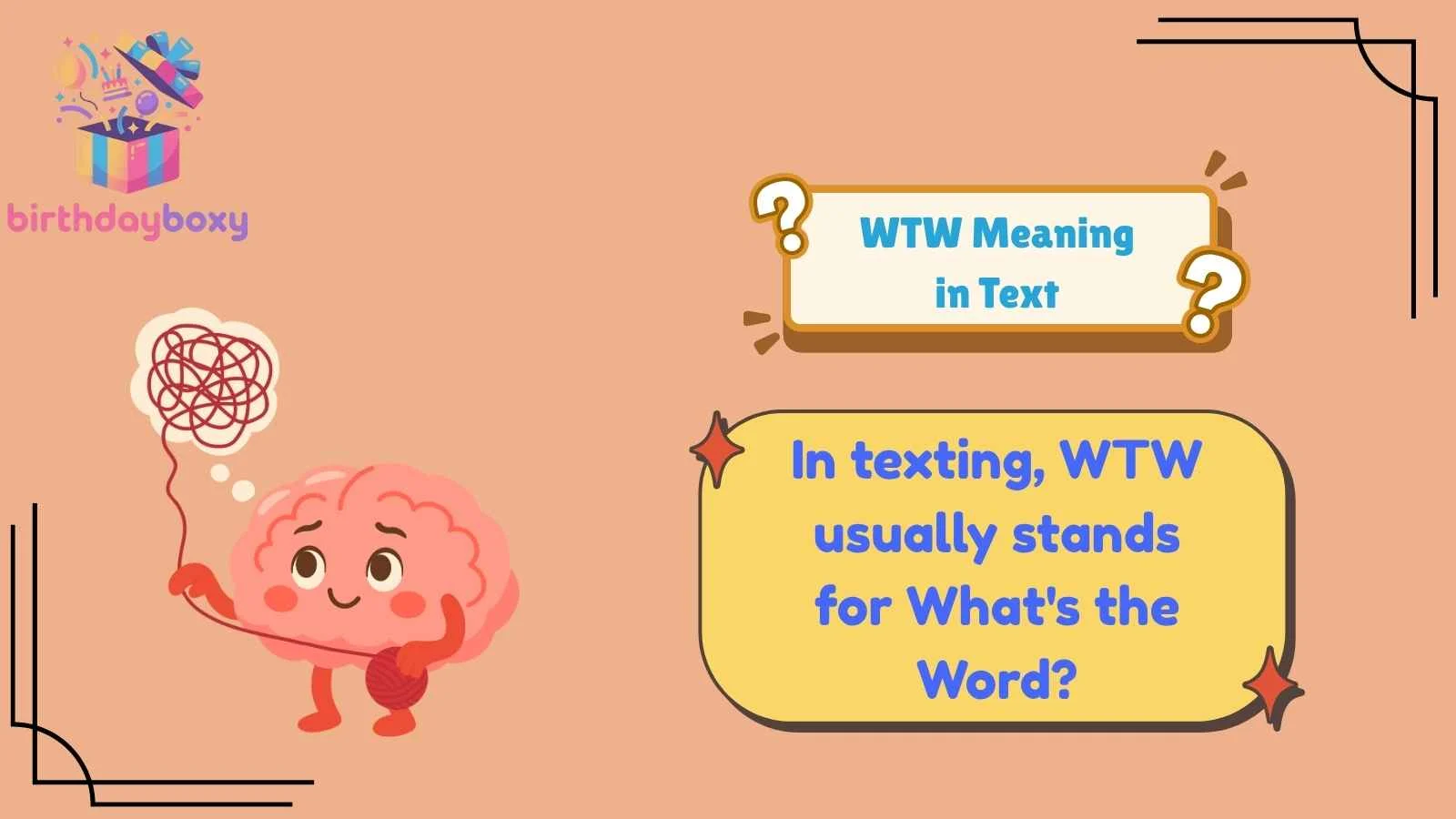
What Does WTW Meaning in Text Mean?
In texting, WTW usually stands for What’s the Word?
This phrase is commonly used as a casual way of asking:
- What’s going on?
- What’s happening?
- What’s the plan?
- What’s up?
- What are you doing?
Rather than typing an entire sentence, people shorten it to WTW for convenience.
Real-Life Examples
Example 1:
Friend: WTW tonight?
Meaning: What’s the plan for tonight?
Example 2:
Friend: Hey, WTW?
Meaning: What’s up? or What’s going on?
Example 3:
Friend: WTW this weekend?
Meaning: What are we doing this weekend?
The exact meaning often depends on the conversation and relationship between the people texting.
Origin and Background of the Term
Like many internet abbreviations, WTW developed naturally as digital communication became faster and more informal.
Years ago, text messages had character limits, and people looked for shorter ways to communicate. Acronyms such as LOL, BRB, OMG, and IDK became popular because they saved time and effort.
WTW followed a similar path.
The phrase What’s the Word? existed long before smartphones. People often used it in face-to-face conversations to ask for news, updates, or plans. As texting culture evolved, the phrase was shortened to WTW.
Social media platforms, messaging apps, and online communities helped spread the abbreviation even further. Today, it is commonly seen among younger generations, although people of many ages use it.
Interestingly, the meaning can vary slightly depending on region, friend groups, and online communities. However, the core idea remains the same: asking what’s happening or what’s planned.
How WTW Is Used in Daily Life
WTW is surprisingly versatile. People use it in many everyday situations.
1. Making Plans
Someone might text:
WTW after work?
They’re asking what everyone plans to do later.
2. Starting a Conversation
Instead of writing a long greeting, someone may simply send:
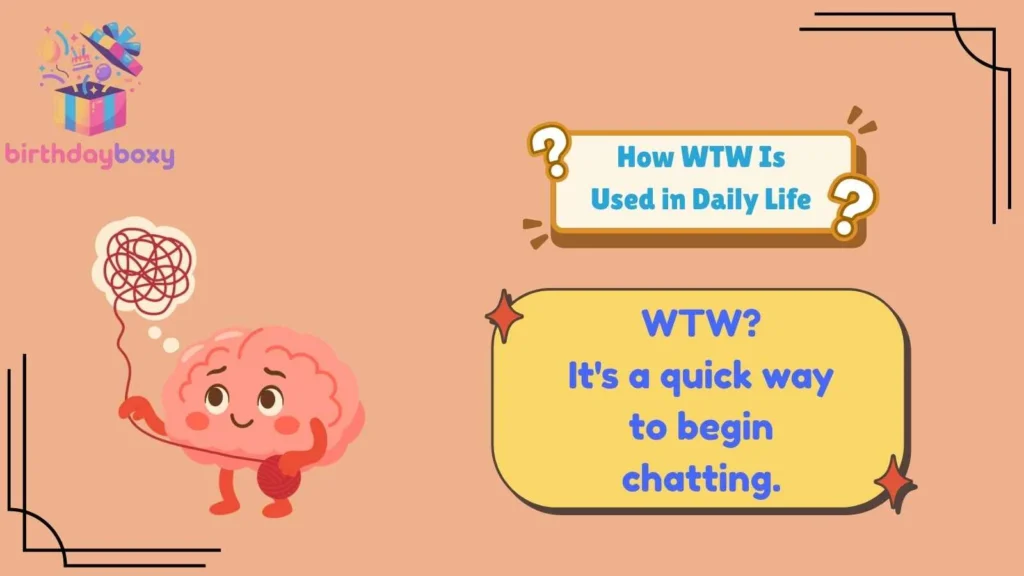
WTW?
It’s a quick way to begin chatting.
3. Checking on Friends
Friends often use WTW to see how someone is doing.
Example:
Hey, haven’t talked in a while. WTW?
4. Asking About Events
Before a party or gathering, people may text:
WTW tonight?
They’re looking for details or updates.
5. Looking for Activities
Someone feeling bored might ask:
WTW this weekend?
They’re hoping friends have ideas.
6. Group Chats
WTW appears frequently in group conversations when people are trying to coordinate plans.
Because it’s short and casual, it fits naturally into modern texting habits.
Emotional or Practical Meaning of WTW
At first glance, WTW may seem like just another abbreviation. However, it often carries a deeper social purpose.
People use WTW to create connections.
When someone asks WTW, they’re usually expressing interest in what others are doing. It opens the door to conversation, friendship, and social interaction.
In today’s busy digital world, quick communication matters. WTW helps people stay connected without requiring lengthy messages.
There’s also an element of friendliness behind it. A simple WTW? can signal:
- Interest
- Curiosity
- Inclusion
- Social engagement
Many friendships and social plans begin with a simple message like this.
Similar or Related Terms
Several texting abbreviations have meanings similar to WTW.
- WYD – What are you doing?
- WSP – What’s up?
- SUP – Short for What’s up?
- HMU – Hit me up.
- WYA – Where are you at?
- YO – Casual greeting.
- BRB – Be right back.
- IDC – I don’t care.
- IDK – I don’t know.
- TTYL – Talk to you later.
Key Difference
WTW often focuses on plans, updates, or what’s happening.
WYD specifically asks what someone is currently doing.
WSP generally asks how someone is doing or what’s happening.
Although similar, each expression has its own subtle purpose.
Common Misunderstandings About WTW
Many people misunderstand WTW when they first encounter it.
Misunderstanding 1: It Has Only One Meaning
In reality, context matters.
WTW can mean What’s the Word? or generally What’s up? depending on the conversation.
Misunderstanding 2: It’s Always About Plans
Not necessarily.
Sometimes it’s simply a greeting or conversation starter.
Misunderstanding 3: It’s Formal Language
WTW is very informal.
You generally wouldn’t use it in professional emails or business communication.
Misunderstanding 4: Only Teenagers Use It
While younger people use it frequently, many adults familiar with texting slang also use WTW.
Misunderstanding 5: It’s Rude
Not at all.
Most people use it casually and in a friendly way.
Misunderstanding 6: Everyone Interprets It the Same Way
Different communities may use WTW slightly differently, though the overall meaning remains similar.
Examples of WTW in Sentences
Here are some natural examples you might encounter.
- WTW tonight? Are we still meeting up?
- Hey, WTW? Haven’t heard from you all week.
- WTW after class today?
- I’m free this weekend. WTW?
- WTW with the group chat? Everyone seems busy.
- WTW later? Want to grab some food?
- Just finished work. WTW?
- WTW this summer? Any travel plans?
These examples show how flexible the term can be.
Why Understanding WTW Matters Today
Language changes constantly.
A generation ago, many of today’s texting abbreviations didn’t exist. Now, digital communication shapes how people interact every day.
Understanding terms like WTW helps you:
- Communicate more effectively.
- Avoid confusion.
- Understand social media conversations.
- Connect with younger audiences.
- Stay current with online culture.
Imagine joining a group chat and seeing several messages filled with abbreviations. Knowing what they mean allows you to participate confidently rather than feeling left out.
For parents, teachers, marketers, and professionals, understanding modern digital language can also provide valuable insight into how people communicate online.
The internet has created its own evolving vocabulary, and WTW is just one example of how language adapts to changing technology.
FAQs:
What does WTW mean in simple words?
WTW usually means What’s the Word? It’s a casual way of asking what’s happening, what’s up, or what the plans are.
Is WTW positive or negative?
WTW is generally neutral or positive. Most people use it as a friendly conversation starter or a way to make plans.
Where is WTW commonly used?
WTW is commonly used in text messages, social media platforms, group chats, online messaging apps, and casual conversations.
Is WTW formal or informal?
WTW is highly informal. It’s best used with friends, family members, or casual acquaintances rather than in professional settings.
Why do people search for WTW meaning in text?
As texting language changes with the passage of time, many people encounter new abbreviations online and want to understand what they mean. Searching for WTW meaning in text helps users communicate more confidently and avoid misunderstandings.
Conclusion:
Understanding WTW meaning in text is easier than it first appears. In most cases, WTW stands for What’s the Word? and serves as a casual way to ask what’s happening, what’s planned, or how someone is doing.
Its popularity reflects how modern communication continues to evolve. Short abbreviations save time, create quick connections, and make conversations feel more natural in a fast-paced digital world.

Sahil Moosa is a passionate content creator and digital enthusiast with a strong focus on delivering clear, engaging, and trustworthy information. With a keen eye for detail and a commitment to quality, Sahil Moosa believes in creating content that not only informs but also adds real value to readers.
Driven by curiosity and continuous learning, Sahil Moosa enjoys exploring new ideas, trends, and insights across various topics. His goal is to present well-researched content in a simple, reader-friendly way, making complex ideas easy to understand.