Have you ever received a message that simply said ASL? and wondered what it meant? If so, you’re not alone.
Internet slang changes quickly, and some abbreviations have been around for so long that newer users often find them confusing.
The phrase ASL meaning in text is one of the most searched internet slang terms because it can have different meanings depending on where and how it’s used.
In some conversations, it refers to personal information. In others, it can represent something completely different.
Understanding online abbreviations is important because digital communication has become a major part of everyday life.
Whether you’re chatting with friends, using social media, gaming online, or joining community forums, knowing what terms like ASL mean can help you communicate confidently and avoid misunderstandings.
In this guide, you’ll learn the meaning, origin, usage, examples, and common misconceptions surrounding ASL in text messages and online conversations.
What Does ASL Meaning in Text Mean?
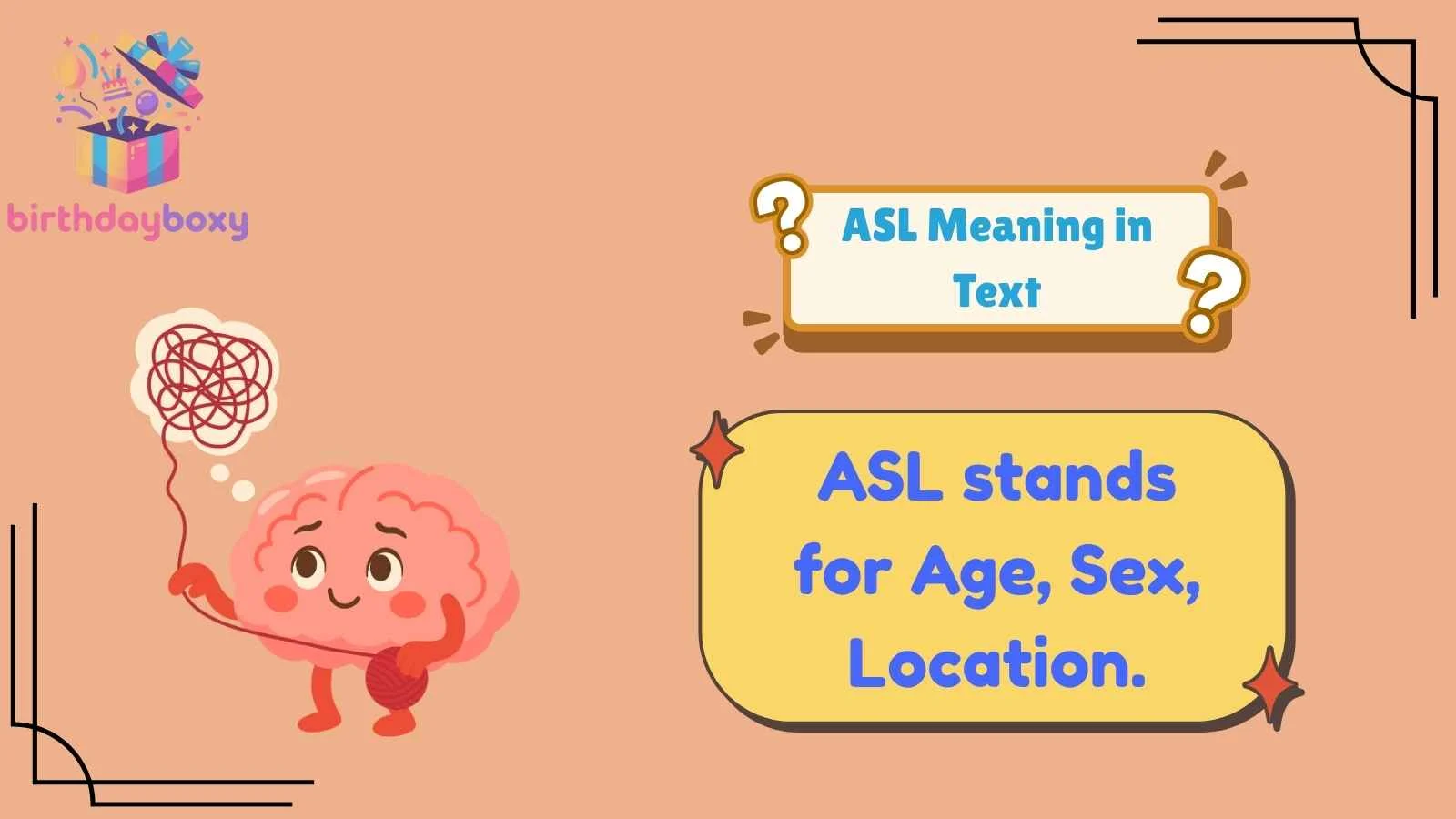
In most online conversations, ASL stands for Age, Sex, Location.
It became a popular shorthand question used to quickly learn basic information about someone during online chats.
For example:
- Person A: Hi!
- Person B: ASL?
- Person A: 21, Female, New York.
In this example, the person is asking for the other user’s age, gender, and location.
The abbreviation was especially popular in chat rooms, instant messaging services, and online communities where people often met strangers for the first time.
Today, ASL may still appear in online conversations, although it is less common than it was in the early days of the internet.
Origin and Background of the Term
The story of ASL takes us back to the early internet era.
Before social media platforms existed, people connected through chat rooms, forums, and messaging services. During the 1990s and early 2000s, typing speed mattered because internet connections were slower and conversations moved quickly.
To save time, users developed abbreviations for frequently asked questions. One of the most common questions was:
How old are you, what gender are you, and where do you live?
Instead of typing all of that repeatedly, people shortened it to ASL.
Imagine entering a busy chat room in 1999. Within seconds, someone might ask, ASL? It was almost like an online introduction.
As technology evolved, social media profiles began displaying personal information automatically. Because of this, ASL became less necessary, though it remains a recognizable part of internet culture.
How ASL Is Used in Daily Life
Although ASL isn’t as common as it once was, people still encounter it in various situations.
1. Online Chat Rooms
Users may ask ASL? when meeting someone new.
Example:
Hey, nice to meet you. ASL?
2. Gaming Communities
Some gamers use ASL while chatting during multiplayer games.
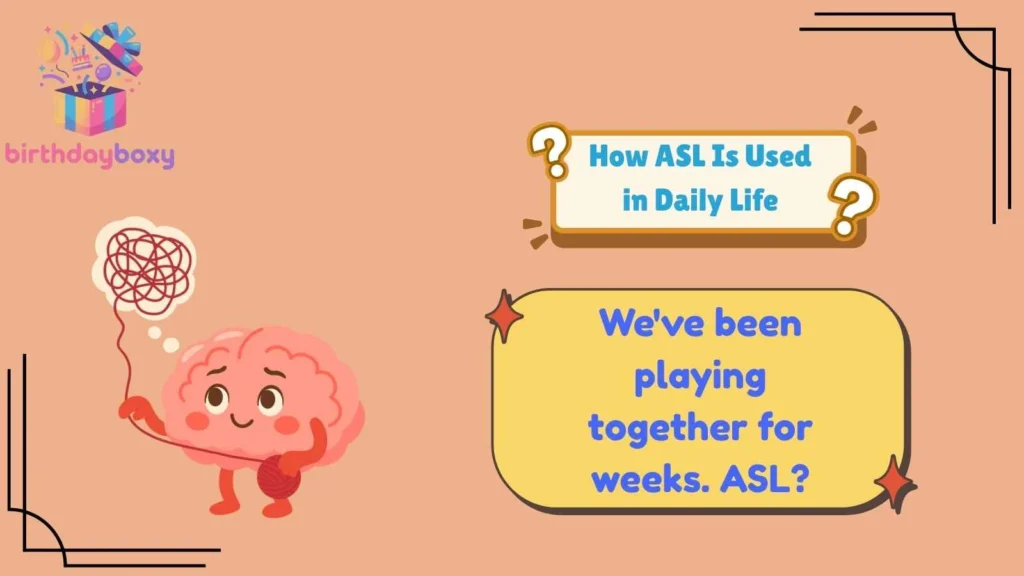
Example:
We’ve been playing together for weeks. ASL?
3. Social Media Conversations
Occasionally, people use ASL in direct messages.
Example:
ASL? Just curious where everyone is from.
4. Online Forums
Community members may use it to get to know each other.
5. Nostalgic Internet Discussions
Older internet users sometimes mention ASL as a throwback to classic online culture.
6. Meme Culture
ASL occasionally appears in memes joking about early internet experiences.
Emotional or Practical Meaning of ASL
At first glance, ASL seems like a simple abbreviation. However, it reflects something deeper about human communication.
People naturally want to learn more about those they’re talking to. ASL was created as a quick way to establish basic context.
From a practical perspective, it helped users:
- Start conversations faster
- Understand who they were speaking with
- Build connections online
- Find people with similar backgrounds
Emotionally, ASL represented curiosity and social interaction during the early days of the internet.
For many long-time internet users, seeing ASL brings back memories of late-night chats, online friendships, and the excitement of connecting with people around the world.
Similar or Related Terms
Several internet abbreviations are related to ASL.
- DM – Direct Message between users.
- IMO – In My Opinion.
- TBH – To Be Honest.
- BRB – Be Right Back.
- IRL – In Real Life.
- IDK – I Don’t Know.
- FYI – For Your Information.
- LOL – Laugh Out Loud.
How They Differ from ASL
Most abbreviations express reactions, opinions, or actions.
ASL is different because it asks for personal information rather than expressing a thought or emotion.
Common Misunderstandings About ASL
Many people misunderstand ASL because it has multiple meanings.
Misconception 1: ASL Always Means Age, Sex, Location
Not always.
In some contexts, ASL refers to American Sign Language.
Misconception 2: ASL Is a Modern Internet Trend
Actually, ASL has been around for decades and originated during the early internet era.
Misconception 3: Everyone Still Uses ASL
While recognizable, it isn’t nearly as popular as it was in the 1990s and early 2000s.
Misconception 4: ASL Is Only Used by Teenagers
People of all ages have used ASL throughout internet history.
Misconception 5: ASL Is Always Appropriate
Some people may prefer not to share personal information online, so context matters.
Misconception 6: ASL Has Only One Meaning
Depending on the conversation, ASL may refer to American Sign Language rather than Age, Sex, Location.
Examples of ASL in Sentences
Here are some natural examples of how ASL appears in conversations:
- I joined a chat room and someone immediately asked, ‘ASL?’
- Back in the day, ASL was one of the first questions people asked online.
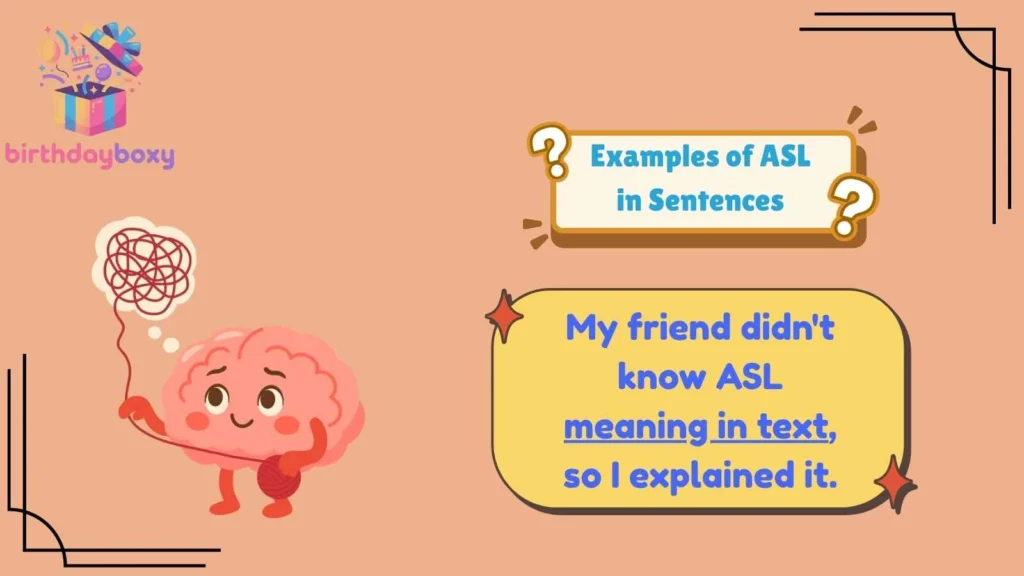
- My friend didn’t know ASL meaning in text, so I explained it.
- The gaming group was chatting and someone casually asked for ASL.
- Many older internet users remember seeing ASL everywhere.
- I thought ASL meant sign language until I saw it in a chat room.
- The abbreviation ASL became popular long before social media existed.
- People often search for ASL meaning in text because it has multiple interpretations.
Why Understanding ASL Matters Today
You might wonder why learning an older internet abbreviation still matters.
The answer is simple: digital communication continues to evolve, and understanding internet slang improves online literacy.
Knowing ASL helps you:
- Understand older online conversations
- Avoid confusion when texting
- Recognize internet culture references
- Communicate more effectively online
- Learn the history of digital communication
Additionally, understanding internet terminology can make navigating forums, gaming communities, and social platforms much easier.
Language constantly changes. What was popular yesterday may seem outdated today, yet many terms continue to influence how people communicate online.
ASL is a perfect example of how internet culture shapes language over time.
FAQs:
What does ASL mean in simple words?
In text conversations, ASL usually means Age, Sex, Location. It’s a quick way to ask someone basic personal information.
Is ASL positive or negative?
ASL is generally neutral. It simply asks for information. Whether it’s appropriate depends on the situation and the comfort level of the people involved.
Where is ASL commonly used?
ASL is most commonly seen in chat rooms, online forums, gaming communities, messaging apps, and discussions about internet culture.
Is ASL formal or informal?
ASL is highly informal. It’s internet slang and is typically used in casual online conversations rather than professional communication.
Why do people search for ASL meaning in text?
People search for it because they encounter the abbreviation in messages, social media posts, online chats, or older internet content and want to understand its meaning.
Conclusion:
The ASL meaning in text most commonly refers to Age, Sex, Location, a classic internet abbreviation that helped people quickly introduce themselves online.
Although it originated decades ago, it remains a recognizable piece of internet culture and still appears in conversations today.
Understanding ASL gives you more than just knowledge of a simple abbreviation—it offers a glimpse into the history of online communication and how digital language evolves over time.

Sahil Moosa is a passionate content creator and digital enthusiast with a strong focus on delivering clear, engaging, and trustworthy information. With a keen eye for detail and a commitment to quality, Sahil Moosa believes in creating content that not only informs but also adds real value to readers.
Driven by curiosity and continuous learning, Sahil Moosa enjoys exploring new ideas, trends, and insights across various topics. His goal is to present well-researched content in a simple, reader-friendly way, making complex ideas easy to understand.