Have you ever received a text message that ended with FFS and wondered what the sender actually meant? You’re not alone.
Modern texting is filled with abbreviations, slang, and internet shortcuts that can sometimes feel confusing.
Among these popular expressions, FFS meaning in text is one of the most searched terms because people frequently encounter it on social media, in chats, online forums, and text conversations.
While it may seem like just another abbreviation, it often carries a strong emotion behind it. Understanding text slang is more important than ever in today’s digital world.
Whether you’re chatting with friends, browsing social media, or communicating at work, knowing what common abbreviations mean can help you avoid misunderstandings and communicate more effectively.
In this guide, you’ll learn exactly what FFS means, where it came from, how people use it, and why it has become such a common part of online communication.
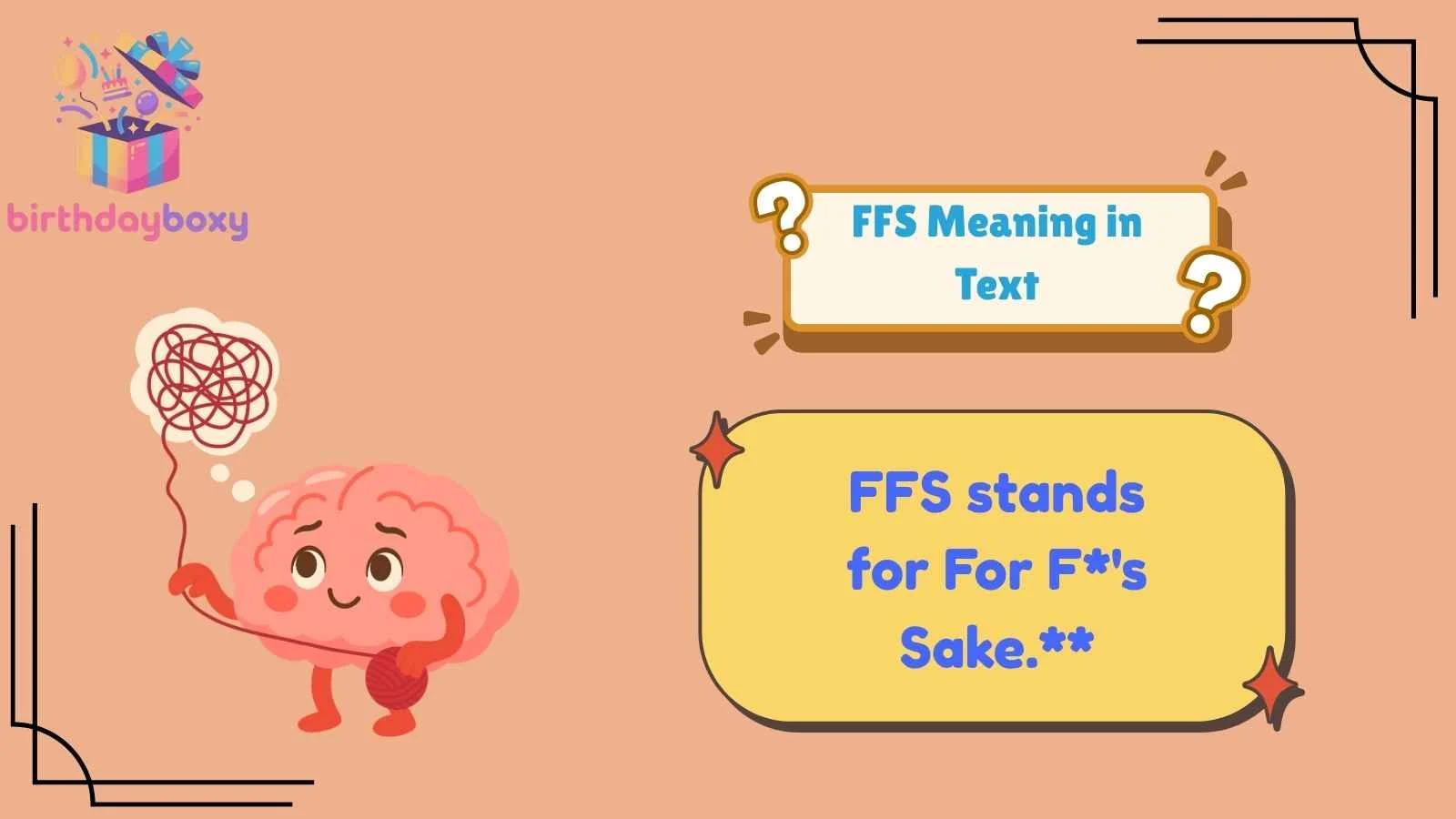
What Does FFS Meaning in Text Mean?
FFS stands for For F*’s Sake.**
It is commonly used to express frustration, annoyance, impatience, disbelief, or exasperation. People usually type it when they are irritated by a situation, a mistake, or something they find unreasonable.
Think of it as a shorter and faster way of expressing:
- Seriously?
- Come on!
- You’ve got to be kidding me.
- This is frustrating.
Real-Life Examples
Example 1:
Friend: I forgot my wallet again.
Response: FFS, how many times has that happened?
Example 2:
The internet stopped working during my meeting. FFS.
Example 3:
FFS, I just finished cleaning and now the dog brought mud inside.
In each example, the abbreviation communicates frustration without requiring a long explanation.
Origin and Background of the Term
The phrase For F***’s Sake existed long before smartphones and social media.
Historically, English speakers used the full expression to show irritation or disbelief. It became especially common in casual conversations in countries such as the United Kingdom, Ireland, Australia, and other English-speaking regions.
As digital communication evolved, people started shortening lengthy phrases into abbreviations to save time. Just as LOL became shorthand for Laugh Out Loud, the phrase For F***’s Sake eventually became FFS.
Interestingly, FFS became particularly popular on online forums in the early internet era. Message boards, gaming communities, and chat rooms adopted it because it conveyed emotion quickly and efficiently.
Over time, it spread across texting apps, social media platforms, and everyday digital conversations.
How FFS Is Used in Daily Life
People use FFS in many everyday situations. Most often, it appears when someone feels mildly or strongly frustrated.
1. Reacting to Mistakes
FFS, I sent the email to the wrong person.
2. Dealing With Technology Problems
FFS, my computer froze again.
3. Responding to Repeated Behavior
FFS, stop leaving the lights on.
4. Expressing Disbelief
FFS, did that really just happen?
5. Sports and Gaming
FFS, we were winning until the last minute.
6. Social Media Reactions
Many users comment FFS when reacting to surprising news, controversial opinions, or frustrating events online.
Because it is short and expressive, it fits naturally into fast-paced digital conversations.
Emotional or Practical Meaning of FFS
Language is not only about sharing information. It is also about expressing emotions.
FFS works because it instantly communicates how someone feels. Instead of typing several sentences explaining frustration, a person can simply write three letters.
Emotionally, FFS often reflects:
- Frustration
- Annoyance
- Disappointment
- Impatience
- Exhaustion
In some situations, it can even be humorous.
For example, if a friend accidentally drops their phone for the third time in one week, another friend might jokingly respond with FFS.
The tone depends heavily on context, relationship, and intent.
In modern digital culture, abbreviations like FFS help people communicate emotions quickly while keeping conversations informal and relatable.
Similar or Related Terms
Several internet abbreviations carry meanings that are somewhat similar to FFS.
- OMG – Expresses surprise or shock.
- SMH – Means Shaking My Head, often showing disappointment.
- WTF – Expresses confusion, disbelief, or frustration.
- TBH – Means To Be Honest.
- LOL – Indicates laughter or amusement.
- BRUH – Often used when something seems ridiculous or disappointing.
- IDC – Means I Don’t Care.
Key Difference
FFS is primarily focused on expressing frustration or annoyance, while the others may communicate different emotions such as surprise, humor, or disbelief.
Common Misunderstandings About FFS
Many people misunderstand this abbreviation when they first encounter it.
1. It Doesn’t Always Mean Anger
Some users assume FFS indicates extreme anger. In reality, it often expresses mild irritation.
2. It’s Not Always Offensive
Although the original phrase contains profanity, many people use FFS casually without intending offense.
3. It Isn’t Suitable for Formal Writing
FFS belongs to informal communication and should generally be avoided in professional documents.
4. Context Matters
The same abbreviation can sound playful among friends but rude in a different setting.
5. Not Everyone Knows the Meaning
Using FFS with people unfamiliar with internet slang may create confusion.
6. It Can Be Used Humorously
Many social media users use FFS jokingly rather than seriously.
Examples of FFS in Sentences
Here are some natural examples you might encounter in everyday conversations:
- FFS, I left my keys inside the house again.
- Can you please answer your phone? FFS.
- FFS, the printer stopped working right before the deadline.
- I studied the wrong chapter. FFS.
- FFS, why is traffic so bad today?
- The game crashed during the final match, FFS.
- FFS, I just bought groceries and forgot the milk.
- FFS, that movie ending made no sense.
These examples show how versatile the abbreviation can be in daily communication.
Why Understanding FFS Matters Today
The internet has transformed how people communicate.
Every year, new abbreviations and slang terms emerge across social media platforms, messaging apps, gaming communities, and online forums. Understanding these expressions helps people participate confidently in digital conversations.
Knowing the FFS meaning in text can help you:
- Understand online discussions.
- Avoid communication misunderstandings.
- Interpret emotional tone correctly.
- Stay updated with internet culture.
- Communicate more naturally in casual conversations.
For parents, teachers, professionals, and language learners, understanding modern digital language can be especially valuable.
As online communication continues evolving, abbreviations like FFS remain a practical part of everyday digital interaction.
FAQs:
What does FFS mean in simple words?
FFS stands for For F***’s Sake. It is used to express frustration, annoyance, or disbelief in a short and informal way.
Is FFS positive or negative?
FFS is generally associated with negative emotions such as frustration or irritation. However, it can sometimes be used humorously among friends.
Where is FFS commonly used?
FFS is commonly used in text messages, social media posts, online forums, gaming chats, and casual conversations.
Is FFS formal or informal?
FFS is highly informal. It is best suited for personal conversations and should generally be avoided in professional or academic communication.
Why do people search for FFS meaning in text?
People often encounter FFS in messages, social media comments, or online discussions and want to understand its meaning, emotional tone, and proper usage.
Conclusion:
Understanding the FFS meaning in text helps you navigate modern digital communication with greater confidence.
While the abbreviation stands for For F***’s Sake, its real purpose is to quickly express frustration, disbelief, or annoyance in everyday conversations.
Like many internet slang terms, FFS reflects how language changes with technology and social interaction.
When used appropriately, it can add emotion and personality to online communication.

Sahil Moosa is a passionate content creator and digital enthusiast with a strong focus on delivering clear, engaging, and trustworthy information. With a keen eye for detail and a commitment to quality, Sahil Moosa believes in creating content that not only informs but also adds real value to readers.
Driven by curiosity and continuous learning, Sahil Moosa enjoys exploring new ideas, trends, and insights across various topics. His goal is to present well-researched content in a simple, reader-friendly way, making complex ideas easy to understand.