Have you ever received a message that simply said FW and wondered what it meant? You’re not alone.
Texting and online communication have created countless abbreviations that can sometimes leave people confused.
Among these common abbreviations, FW meaning in text is one that appears regularly in emails, messages, social media conversations, and workplace communication.
While it may seem simple at first glance, its meaning can vary depending on the situation and platform.
Understanding these shorthand expressions helps you communicate more confidently and avoid misunderstandings.
Whether you’re chatting with friends, replying to work emails, or browsing online discussions, knowing what FW means can make digital conversations much easier to follow.
In this guide, we’ll explore the meaning, origin, usage, examples, common misconceptions, and practical importance of FW in modern communication.
What Does FW Meaning in Text Mean?
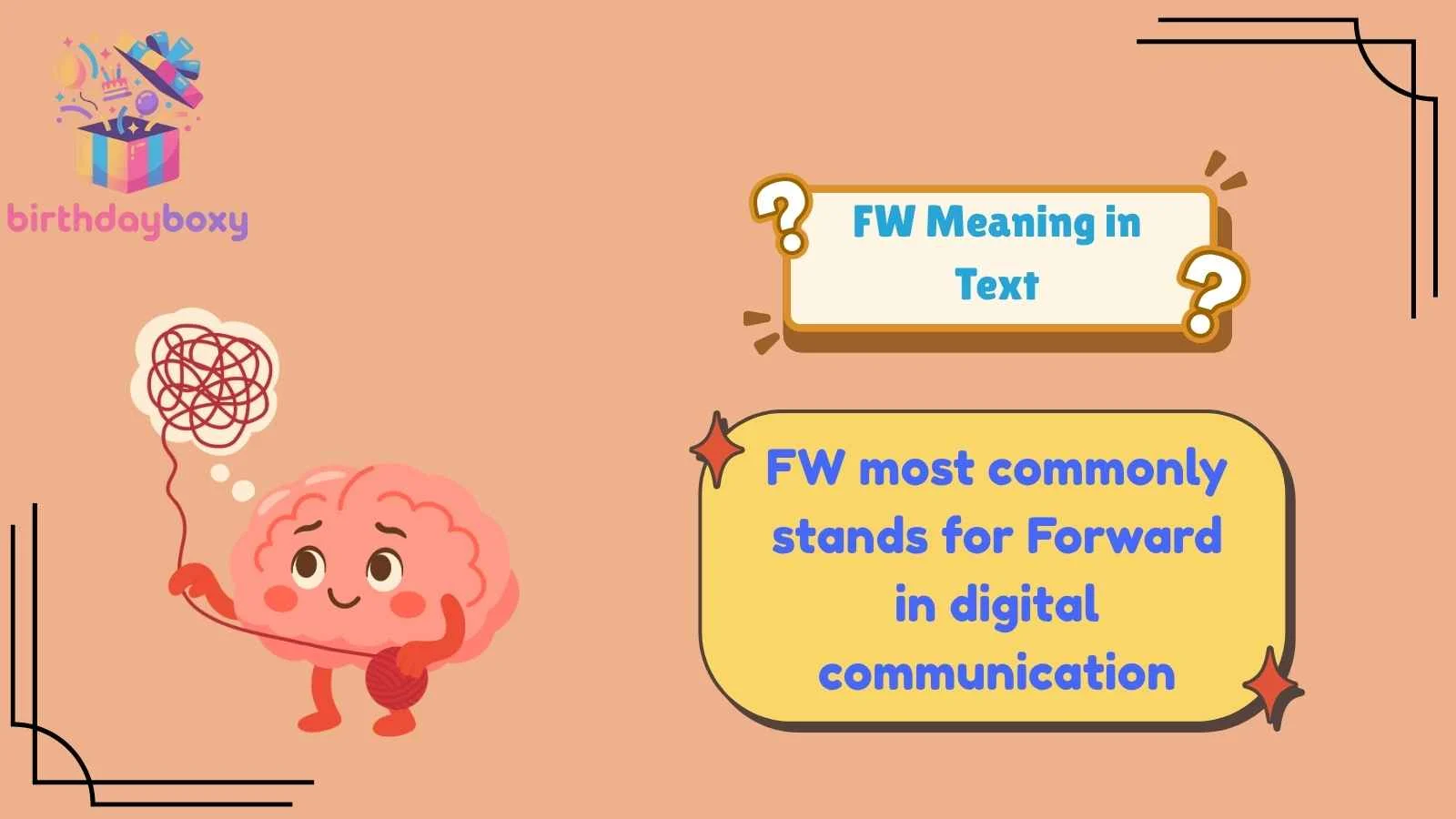
The abbreviation FW most commonly stands for Forward in digital communication.
When someone uses FW, they’re usually indicating that a message, email, article, image, or piece of information has been forwarded from another source.
For example:
- FW: Meeting Schedule for Next Week
- FW: Important Company Announcement
- FW: Check Out This Funny Video
In these examples, the sender is letting recipients know that the content was originally sent by someone else and is now being shared again.
In some informal online contexts, FW may occasionally have alternative meanings, but Forward remains the most widely recognized interpretation.
Real-Life Examples
Imagine your manager receives an important update from a client. Instead of rewriting the entire message, they simply forward it to the team with FW in the subject line.
Or perhaps a friend discovers an interesting article and forwards it to your group chat. The FW label quickly tells everyone the information originated elsewhere.
This small abbreviation saves time while providing useful context.
Origin and Background of the Term
The history of FW is closely connected to the evolution of email communication.
Back in the early days of electronic mail, users needed a simple way to identify messages that had been passed along from one person to another. Email programs began automatically adding indicators such as FW: or FWD: before subject lines.
Over time, these labels became standard across various email platforms.
As internet culture expanded, people became familiar with seeing FW in their inboxes. Eventually, the abbreviation spread beyond email and appeared in text messages, social media conversations, and workplace chat applications.
It’s a great example of how technology influences language. What started as a technical email feature eventually became part of everyday communication.
How FW Is Used in Daily Life
Today, FW appears in many different situations.
1. Workplace Emails
Employees often use FW when sharing updates, reports, or instructions.
Example:
FW: Client Feedback for Review
2. School Communication
Teachers and students may forward announcements or assignment details.
Example:
FW: Updated Exam Schedule
3. Family Conversations
Family members often share important information with relatives.
Example:
FW: Family Reunion Details
4. Social Media Sharing
People sometimes use FW when reposting content from another source.
Example:
FW: Interesting Travel Tips
5. Group Chats
Friends may forward messages containing useful information or entertainment.
Example:
FW: You’ll love this meme.
6. Professional Networking
Business contacts frequently forward opportunities, recommendations, or industry updates.
Example:
FW: Job Opening You Might Like
These everyday uses show how versatile and practical the abbreviation has become.
Emotional or Practical Meaning of FW
At first glance, FW might seem like a purely functional abbreviation. However, it serves an important purpose in communication.
Practically speaking, FW creates transparency. It tells readers that the content originated elsewhere and has been shared intentionally.
Emotionally, forwarding information can represent trust and connection.
For example:
- A friend forwards career advice because they care about your success.
- A family member forwards health information because they’re concerned about your well-being.
- A colleague forwards a useful resource to help you perform better at work.
In these situations, forwarding becomes more than a technical action. It reflects a desire to help, inform, or support others.
In today’s fast-moving digital world, that small abbreviation often carries meaningful social value.
Similar or Related Terms
Several abbreviations are closely related to FW.
- FWD – Another common abbreviation for Forward.
- RE – Indicates a reply to a previous message.
- FYI – Means For Your Information.
- IMO – Means In My Opinion.
- DM – Refers to a Direct Message.
- PM – Refers to a Private Message.
- CC – Carbon Copy in email communication.
- BCC – Blind Carbon Copy in email communication.
Key Difference
FW specifically indicates that content is being forwarded from another source, while the other abbreviations serve different communication purposes.
Common Misunderstandings About FW
Many people misunderstand FW, especially when encountering it for the first time.
Misconception 1: FW Has Only One Meaning Everywhere
While Forward is the most common meaning, context always matters.
Misconception 2: FW Is Only Used in Emails
Not true. It also appears in text messages, chat apps, and online platforms.
Misconception 3: FW Means the Sender Created the Content
Actually, FW often indicates the opposite. The sender is sharing content that originated elsewhere.
Misconception 4: FW Is Outdated
Although email usage has evolved, FW remains widely used today.
Misconception 5: FW Is a Formal Term
It can be used formally or informally depending on the situation.
Misconception 6: Everyone Automatically Understands It
Many people, especially younger users who rely heavily on social media rather than email, may not immediately recognize the abbreviation.
Examples of FW in Sentences
Here are some natural examples showing how FW appears in everyday communication:
- FW: The meeting has been moved to Friday afternoon.
- I just sent you an FW email with all the project details.
- FW: Here’s the article I mentioned yesterday.
- My teacher forwarded the schedule and marked it with FW.
- FW: Please review these documents before tomorrow.
- My friend sent an FW message about a local event.
- FW: Check out this amazing travel guide.
- The manager forwarded the client’s feedback using FW in the subject line.
These examples reflect how commonly the abbreviation appears in modern communication.
Why Understanding FW Matters Today
Digital communication is now a major part of daily life.
Whether you’re a student, employee, business owner, or casual internet user, understanding common abbreviations helps you communicate more effectively.
Knowing the FW meaning in text offers several benefits:
- Improves communication skills.
- Reduces confusion.
- Helps you understand email chains.
- Makes workplace interactions easier.
- Enhances digital literacy.
- Saves time when reading messages.
Consider a job applicant who receives an email titled FW: Interview Details. Understanding FW immediately provides context and helps them respond appropriately.
Similarly, professionals who recognize communication abbreviations can navigate workplace correspondence more efficiently.
As technology continues to shape language, staying familiar with common terms becomes increasingly valuable.
FAQs:
What does FW mean in simple words?
FW usually means Forward. It indicates that a message, email, or piece of content has been shared from another source.
Is FW positive or negative?
FW is generally neutral. It simply describes the action of forwarding information. The tone depends on the content being shared.
Where is FW commonly used?
FW is commonly used in emails, workplace communication, school correspondence, text messages, and online discussions.
Is FW formal or informal?
FW can be both formal and informal. It’s frequently used in professional emails but also appears in casual conversations.
Why do people search for FW meaning in text?
People search for the term because they encounter it in messages or emails and want to understand what it means and how it should be interpreted in context.
Conclusion:
Understanding the FW meaning in text is surprisingly useful in today’s digital world.
Most commonly, FW stands for Forward, indicating that information has been passed from one person to another.
While the abbreviation is simple, it plays an important role in helping people share information efficiently and transparently.
From workplace emails and school announcements to family updates and social media sharing, FW remains a widely recognized part of modern communication.
Knowing what it means can help you avoid confusion, respond appropriately, and communicate more effectively online.

Sahil Moosa is a passionate content creator and digital enthusiast with a strong focus on delivering clear, engaging, and trustworthy information. With a keen eye for detail and a commitment to quality, Sahil Moosa believes in creating content that not only informs but also adds real value to readers.
Driven by curiosity and continuous learning, Sahil Moosa enjoys exploring new ideas, trends, and insights across various topics. His goal is to present well-researched content in a simple, reader-friendly way, making complex ideas easy to understand.