Have you ever received a text message that simply said HM and wondered what the sender actually meant? You’re not alone.
In today’s fast-moving digital world, people often shorten words and phrases to save time while texting, chatting, or posting online.
Among the many internet abbreviations, HM meaning in text is one that frequently confuses people because it can have different meanings depending on the conversation.
One person might use it to show they’re thinking, while another may use it as a quick response to a message.
Understanding these small texting expressions can make communication easier and help you avoid misunderstandings.
Whether you’re chatting with friends, reading social media comments, or trying to understand online conversations, knowing what HM means can be surprisingly useful.
In this guide, you’ll learn the meaning of HM in text, where it came from, how people use it in daily conversations, and why it continues to be popular in digital communication.
What Does HM Meaning in Text Mean?
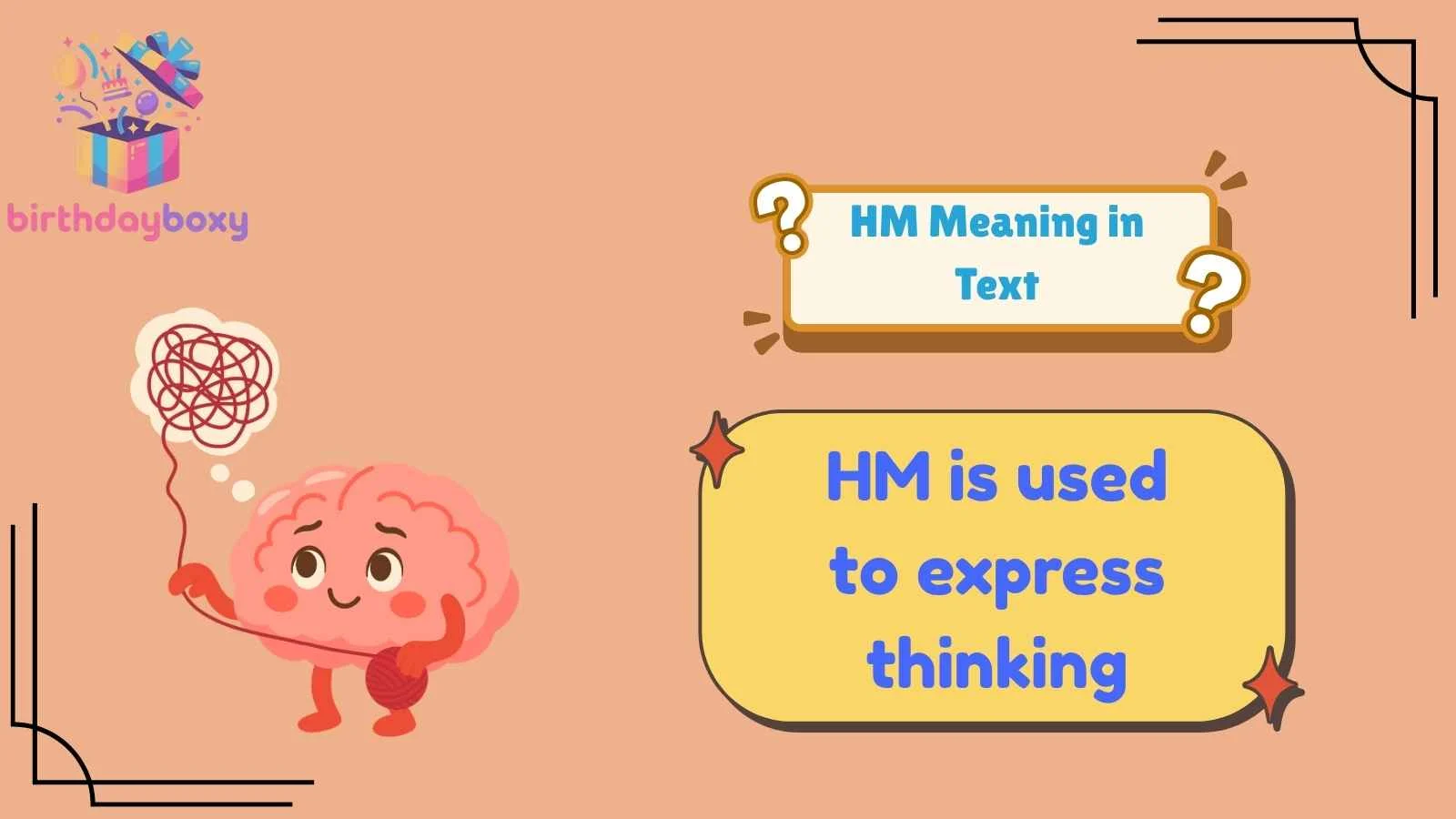
In most text conversations, HM is used to express thinking, hesitation, curiosity, or consideration. It’s similar to the sound people make when they’re thinking about something.
For example:
- HM, that’s an interesting idea.
- HM, I’m not sure about that.
- HM, let me think for a minute.
Rather than providing an immediate answer, the sender uses HM to show they are processing information.
In some situations, HM can also mean:
- A thoughtful reaction
- Mild doubt
- Curiosity
- A pause before responding
The exact meaning often depends on the tone and context of the conversation.
Real-Life Examples
Imagine your friend asks:
Should we go hiking this weekend?
You might reply:
HM, the weather doesn’t look great.
Here, HM indicates that you’re considering the idea before giving your opinion.
Another example:
HM, I never thought about it that way.
In this case, it shows interest and reflection.
Origin and Background of the Term
Unlike many internet abbreviations that stand for specific words, HM originated from a natural human sound.
Think about how people respond when they’re considering something carefully. Many individuals instinctively make sounds like:
- Hmm
- Hm
- Hmmm
These sounds have existed in spoken language for centuries. They communicate thoughtfulness without requiring a complete sentence.
As texting became more popular, people began shortening these expressions. Instead of typing hmmm, many simply typed HM.
This evolution reflects how digital communication often mirrors spoken conversation. People wanted a quick way to express thought, uncertainty, or interest without writing lengthy responses.
Over time, HM became a common part of online culture, especially among younger generations who frequently use shorthand communication.
How HM Is Used in Daily Life
You can find HM in many different digital conversations.
1. Showing Thoughtfulness
Someone shares an idea.
Response:
HM, that’s worth considering.
2. Expressing Doubt
A friend tells an unbelievable story.
Response:
HM, are you sure that happened?
3. Reacting to New Information
Someone reveals surprising news.
Response:
HM, I didn’t know that.
4. Taking Time to Decide
A person asks a question.
Response:
HM, let me think.
5. Showing Curiosity
Someone mentions an unfamiliar topic.
Response:
HM, tell me more.
6. Softening a Response
Instead of immediately disagreeing, a person may say:
HM, I see your point, but I think differently.
This makes conversations feel less confrontational.
Emotional or Practical Meaning of HM
One reason HM remains popular is that it communicates emotion without requiring many words.
When people use HM, they’re often expressing:
- Curiosity
- Reflection
- Uncertainty
- Interest
- Caution
- Consideration
In modern communication, tone can sometimes be difficult to interpret through text alone. HM helps fill that gap by signaling that the sender is thinking rather than reacting impulsively.
From a practical perspective, it also gives people a moment to process information before responding.
In social interactions, this can make conversations feel more thoughtful and genuine.
Similar or Related Terms
Several abbreviations and expressions are closely related to HM.
- Hmm – A longer version showing deeper thought.
- Hmmm – Often indicates stronger consideration or skepticism.
- Uh-huh – Shows agreement or acknowledgment.
- Oh – Expresses realization or surprise.
- Eh – Suggests uncertainty or indifference.
- IDK – Means I don’t know.
- TBH – Means to be honest.
- IMO – Means in my opinion.
While these expressions may appear similar, HM specifically emphasizes thinking or reflection rather than agreement or certainty.
Common Misunderstandings About HM
Many people misunderstand HM because context matters.
Misconception 1: HM Always Means Confusion
Not necessarily.
Sometimes it simply means the person is thinking.
Misconception 2: HM Is Negative
Many users assume HM signals disapproval.
In reality, it can be completely neutral.
Misconception 3: HM Means the Same Thing Everywhere
Different communities may use HM slightly differently.
The conversation context is important.
Misconception 4: HM Is Rude
Some people think a short reply like HM is dismissive.
Often, it’s simply a quick way of expressing thoughtfulness.
Misconception 5: HM Is an Official Acronym
Unlike abbreviations such as LOL or BRB, HM is often just a written version of a thinking sound.
Misconception 6: HM Is Only Used by Teenagers
People of all ages use HM in texts, emails, social media comments, and messaging apps.
Examples of HM in Sentences
Here are some natural examples of HM in everyday conversations:
- HM, that’s a good question.
- HM, I need more information before deciding.
- HM, I never noticed that before.
- HM, maybe you’re right.
- HM, let me check my schedule.
- HM, that sounds interesting.
- HM, I’m not completely convinced.
- HM, we should discuss this further.
These examples show how flexible and useful HM can be in digital communication.
Why Understanding HM Matters Today
The way people communicate has changed dramatically over the past two decades.
Text messages, social media platforms, online forums, and messaging apps have created an environment where short expressions dominate conversations.
Understanding terms like HM helps you:
- Communicate more effectively
- Interpret messages correctly
- Avoid misunderstandings
- Participate confidently in online discussions
- Understand modern internet culture
For students, professionals, parents, and social media users, learning common texting expressions can improve digital literacy.
As language evolves, staying familiar with these terms makes communication smoother and more enjoyable.
FAQs:
What does HM mean in simple words?
HM usually means a person is thinking, considering something, or reflecting before giving a response.
Is HM positive or negative?
HM is generally neutral. Depending on the context, it can express curiosity, interest, doubt, or thoughtful consideration.
Where is HM commonly used?
HM is commonly used in text messages, social media conversations, online chats, forums, and messaging applications.
Is HM formal or informal?
HM is considered informal. It’s most appropriate for casual conversations rather than professional or academic writing.
Why do people search for HM meaning in text?
As digital communication evolves over time, many people encounter unfamiliar abbreviations and want to understand their meanings to avoid confusion in conversations.
Conclusion:
Understanding HM meaning in text can help you navigate modern digital conversations with greater confidence.
While it may seem like a small expression, HM carries important signals about thoughtfulness, curiosity, hesitation, and reflection.
The next time someone sends you HM, you’ll know that they’re likely considering something rather than ignoring the conversation.
Context remains the key to understanding its exact meaning, but in most cases, HM simply reflects a moment of thought.

Sahil Moosa is a passionate content creator and digital enthusiast with a strong focus on delivering clear, engaging, and trustworthy information. With a keen eye for detail and a commitment to quality, Sahil Moosa believes in creating content that not only informs but also adds real value to readers.
Driven by curiosity and continuous learning, Sahil Moosa enjoys exploring new ideas, trends, and insights across various topics. His goal is to present well-researched content in a simple, reader-friendly way, making complex ideas easy to understand.