Have you ever received a text message that made you stop and think, Wait, what does that mean? If so, you’re not alone.
Modern texting is full of abbreviations, slang, and shortcuts that can leave people confused. One term that often catches attention is ion.
At first glance, you might think it has something to do with science class or chemistry. After all, an ion is a charged particle in science.
However, when people use ion in text messages, it usually means something completely different.
Understanding texting slang helps you communicate more naturally and avoid misunderstandings.
Whether you’re chatting with friends, scrolling through social media, or trying to understand a message from a younger family member, knowing the meaning of ion can make conversations much easier.
In this guide, you’ll learn what ion means in text, where it came from, how people use it, and why it has become so popular in online communication.
What Does Ion Meaning in Text Mean?
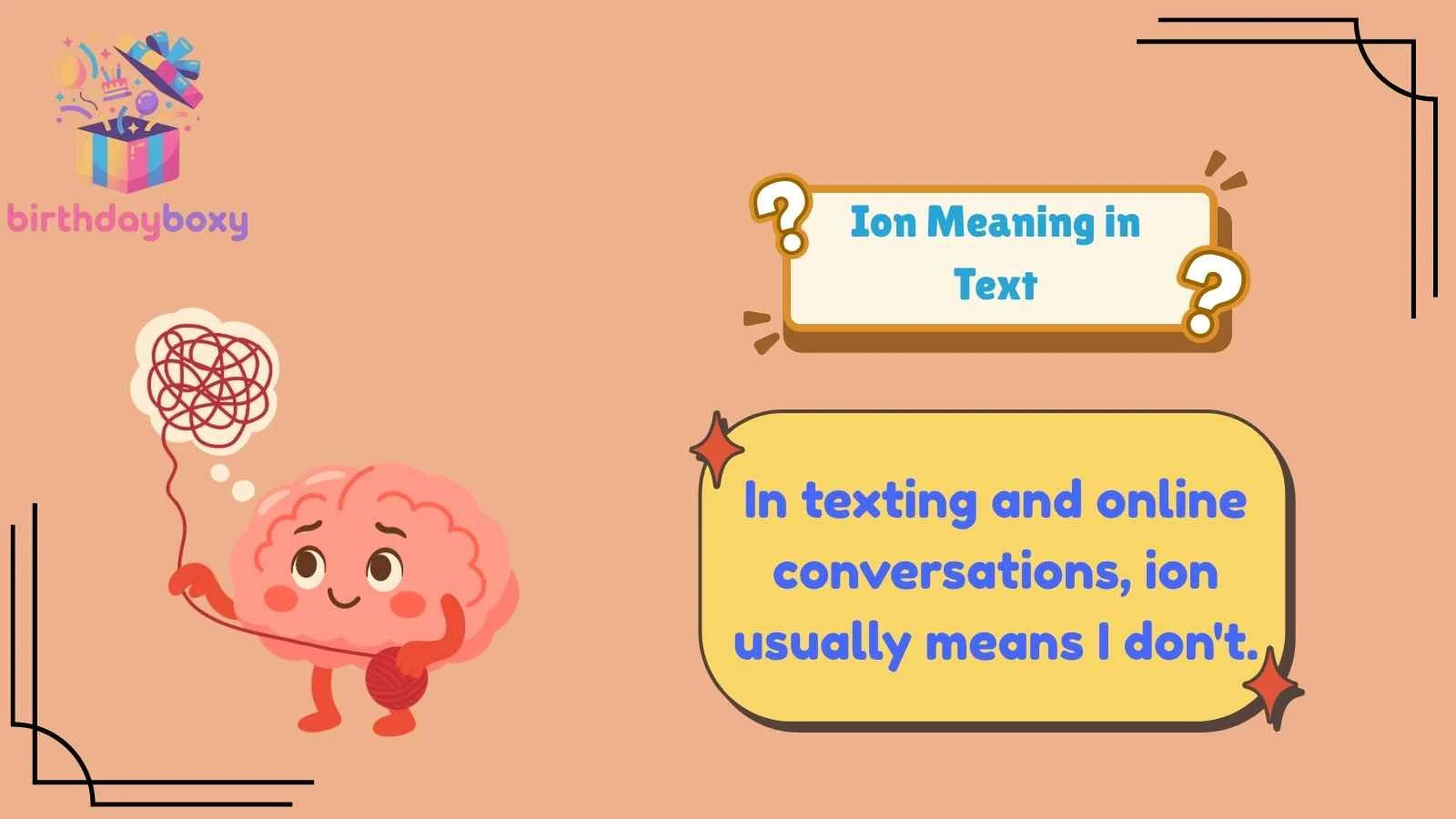
In texting and online conversations, ion usually means I don’t.
It’s a shortened version of the phrase I don’t, where the pronunciation naturally sounds like ion when spoken quickly.
For example:
- Ion know what happened.
- Ion think that’s a good idea.
- Ion want to go today.
In each example, ion simply replaces I don’t.
This slang is commonly used in casual conversations, especially on social media platforms, text messages, and online chats.
Real-Life Examples
Imagine your friend asks:
Do you know where Jake went?
You might reply:
Ion know.
Another example:
Are you coming to the party?
Ion think so.
The meaning remains simple and easy to understand once you recognize the shortcut.
Origin and Background of the Term
Language changes constantly. Every generation creates new ways to communicate faster and more efficiently. The term ion is a perfect example of this evolution.
The slang version of ion developed from spoken English. In many dialects and casual conversations, people often pronounce I don’t very quickly. When spoken naturally, I don’t can sound remarkably similar to ion.
Over time, social media users began writing the word exactly as it sounded. Platforms like TikTok, Instagram, Snapchat, and Twitter helped spread the expression to millions of users.
A teenager texting friends might type:
Ion care.
Another person sees the phrase, understands it, and starts using it too. This simple process allowed the slang term to become part of modern internet culture.
Today, ion is recognized across many online communities and continues to be widely used in casual digital communication.
How Ion Is Used in Daily Life
You don’t need to be a social media expert to encounter this term. Here are several practical situations where people use ion every day.
1. Casual Text Conversations
Friend: Did you finish your homework?
Reply: Ion finish it yet.
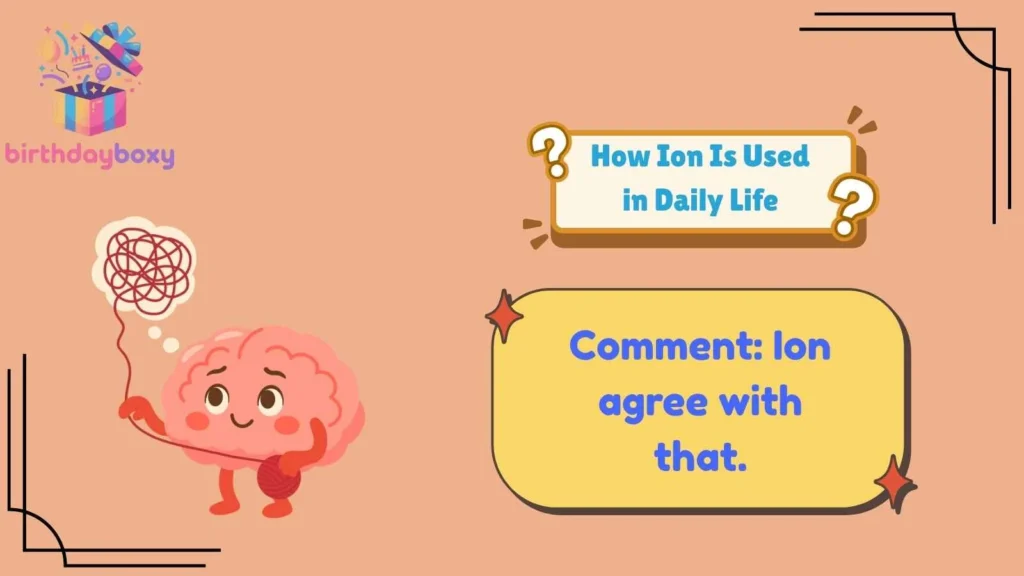
2. Social Media Comments
Someone posts a controversial opinion.
Comment: Ion agree with that.
3. Group Chats
Friend: Who’s bringing snacks?
Reply: Ion know.
4. Online Gaming
Player: Ion think we can win this round.
5. Family Conversations
Sibling: Do you want pizza?
Reply: Ion feel like eating pizza today.
6. Meme Culture
Many memes use ion because it sounds casual, funny, and relatable.
The popularity of the term comes from its simplicity. People enjoy quick communication, and ion helps shorten messages without changing the meaning.
Emotional or Practical Meaning of Ion
On the surface, ion seems like just another internet abbreviation. However, it also reflects something deeper about modern communication.
People want conversations to feel natural and relaxed. Using slang often creates a sense of belonging and familiarity.
When someone says:
Ion know.
It feels more casual than:
I do not know.
Similarly:
Ion care.
Can sound more conversational than:
I do not care.
This doesn’t necessarily make one version better than the other. Instead, each version serves a different purpose depending on the situation.
In online spaces, slang helps people express personality, identity, and cultural connection. That’s one reason why terms like ion continue to thrive.
Similar or Related Terms
Here are some related texting expressions that people often use alongside ion:
- IDK – Means I don’t know.
- IMO – Means In my opinion.
- TBH – Means To be honest.
- NGL – Means Not gonna lie.
- FR – Means For real.
- BRB – Means Be right back.
- SMH – Means Shaking my head.
- IKR – Means I know, right?
Key Difference
While many abbreviations use initials, ion is based on pronunciation rather than initials. That’s what makes it unique among internet slang terms.
Common Misunderstandings About Ion
Many people misunderstand the meaning of ion when they first see it.
Misconception 1: It Always Refers to Science
Not necessarily.
In chemistry, an ion is a charged atom or molecule. In texting, ion usually means I don’t.
Misconception 2: It’s a Typing Error
Some people assume ion is a mistake. In reality, it’s intentional slang.
Misconception 3: Only Teenagers Use It
Teenagers helped popularize it, but many adults now recognize and use the term online.
Misconception 4: It’s Always Negative
Not at all.
The term simply replaces I don’t and can be used in positive, neutral, or negative contexts.
Misconception 5: It’s Appropriate Everywhere
Ion works best in informal communication. It may not be suitable for professional emails or formal writing.
Misconception 6: Everyone Knows What It Means
Many people still encounter the term for the first time and need clarification.
Examples of Ion in Sentences
Here are some everyday examples that show how naturally the word fits into conversations:
- Ion know why my phone keeps freezing.
- Ion think we’re leaving anytime soon.
- Ion remember where I put my keys.
- Ion feel like watching a movie tonight.
- Ion see the problem everyone is talking about.
- Ion have enough time to finish that today.
- Ion believe everything I read online.
- Ion want to miss the concert this weekend.
These examples demonstrate how ion simply replaces I don’t in casual speech.
Why Understanding Ion Matters Today
Modern communication moves quickly. New words and expressions appear almost every day.
Understanding terms like ion helps you:
- Follow online conversations more easily.
- Communicate with younger audiences.
- Avoid confusion in text messages.
- Stay informed about internet culture.
- Improve digital literacy.
Imagine receiving a message that says:
Ion think that’s true.
Without knowing the slang, you might spend time trying to decode it. Once you understand the meaning, the sentence becomes instantly clear.
As language evolves, learning new expressions keeps communication smooth and enjoyable.
FAQs:
What does ion mean in simple words?
In texting, ion usually means I don’t. It is a slang shortcut commonly used in casual online conversations.
Is ion positive or negative?
Neither. Ion is generally neutral. The overall meaning depends on the sentence in which it is used.
Where is ion commonly used?
It is commonly used in text messages, social media comments, online chats, gaming communities, and casual conversations.
Is ion formal or informal?
Ion is considered informal slang. It is best suited for personal conversations rather than professional or academic writing.
Why do people search for ion meaning in text?
People search for it because they encounter the term in messages, social media posts, or comments and want to understand what it means. As online language changes over time, new slang terms often create curiosity.
Conclusion
The phrase ion meaning in text is much simpler than many people expect. In most online conversations, ion means I don’t.
It originated from casual pronunciation, gained popularity through social media, and became a common part of modern digital communication.
Understanding slang like ion helps you navigate today’s online world with greater confidence.
Whether you’re texting friends, reading comments, or exploring internet culture, knowing these expressions makes communication smoother and more enjoyable.

Sahil Moosa is a passionate content creator and digital enthusiast with a strong focus on delivering clear, engaging, and trustworthy information. With a keen eye for detail and a commitment to quality, Sahil Moosa believes in creating content that not only informs but also adds real value to readers.
Driven by curiosity and continuous learning, Sahil Moosa enjoys exploring new ideas, trends, and insights across various topics. His goal is to present well-researched content in a simple, reader-friendly way, making complex ideas easy to understand.