Have you ever received a message that simply said WYA? and wondered what the sender meant? If you’re active on social media, texting apps, or online chats, you’ve probably seen this short abbreviation more than once.
Digital communication moves fast. People often shorten words and phrases to save time and make conversations quicker.
That’s exactly why abbreviations like WYA have become so popular. Understanding text slang isn’t just about keeping up with trends.
It helps you communicate more effectively, avoid misunderstandings, and feel confident when chatting online.
Whether you’re texting friends, talking to family members, or connecting with people on social media, knowing what WYA means can make conversations smoother.
In this guide, you’ll learn the meaning of WYA, where it came from, how people use it in everyday life, common misconceptions, examples, and why this simple abbreviation remains relevant in modern communication.
What Does WYA Mean?
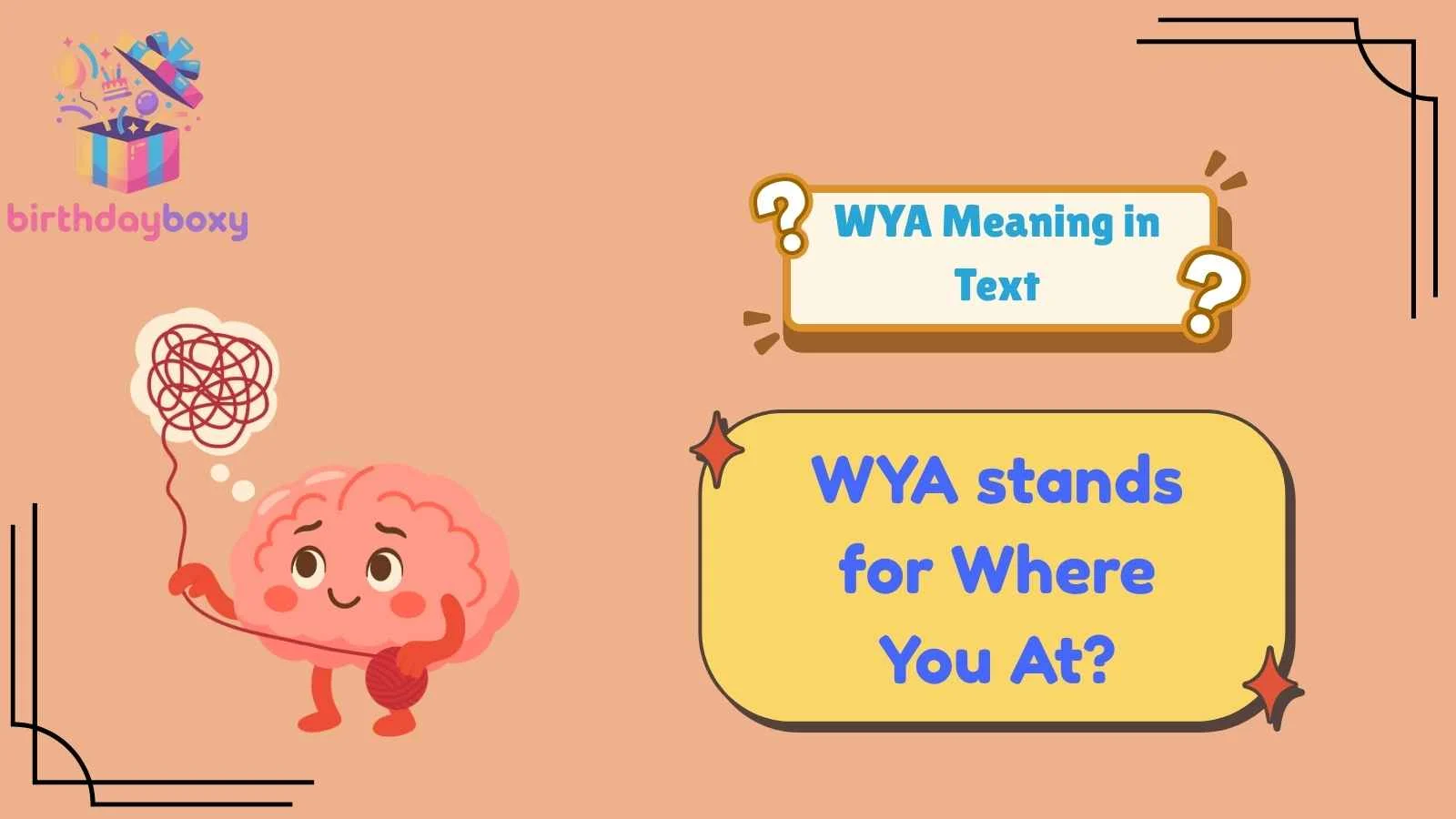
WYA stands for Where You At?
It’s an informal way of asking someone where they are or what they’re currently doing. Instead of typing the full question, people simply write WYA to save time.
The phrase is commonly used in text messages, direct messages, group chats, and social media conversations.
Real-Life Examples
- Your friend is late for a meetup, so you text: WYA?
- A family member is expected at dinner but hasn’t arrived yet.
- Someone wants to know if you’re available to hang out.
In each case, the sender is simply asking about your location or current situation.
The tone is usually casual and friendly rather than serious or demanding.
Origin and Background of the Term
The story of WYA is closely tied to the rise of mobile texting.
Back in the early days of text messaging, people often had limited characters available in their messages. Typing long sentences took more time and effort on older mobile phones. As a result, abbreviations became extremely popular.
Terms like LOL, BRB, IDK, and WYA emerged naturally as people looked for faster ways to communicate.
The phrase Where you at? itself existed in spoken English long before smartphones. It’s a casual conversational expression commonly heard in many English-speaking communities.
When texting culture exploded in the 2000s and 2010s, people shortened the phrase to WYA. Social media platforms later helped spread it worldwide.
Today, WYA is understood by millions of users and remains one of the most common location-related abbreviations used online.
How WYA Is Used in Daily Life
People use WYA in many different situations. Here are some common examples.
1. Meeting Friends
If you’re waiting at a restaurant, you might text:
WYA? We’re already here.
2. Checking Availability
Someone may ask:
WYA tonight?
In this context, they’re asking what you’re doing and whether you’re free.
3. During Events
At concerts, festivals, or sports events, friends often use WYA to find each other quickly.
4. Casual Conversations
Sometimes people send WYA simply to start a conversation.
WYA these days? Haven’t heard from you.
5. Family Communication
Parents and siblings frequently use WYA when checking in on family members.
6. Social Media Messaging
Many people send WYA through Instagram, Snapchat, Facebook Messenger, or other platforms to begin chatting.
The flexibility of the term is one reason it has stayed popular for so long.
Emotional or Practical Meaning of WYA
At first glance, WYA may seem like a simple location question. However, it often carries additional meaning.
In many situations, asking WYA shows interest and connection.
A friend asking WYA might be saying:
- I want to see you.
- I miss talking to you.
- I’m checking if you’re okay.
- I want to include you in plans.
The phrase can create a sense of belonging and social connection.
In today’s fast-paced world, people are constantly moving between work, school, and personal activities. Quick expressions like WYA help maintain communication without requiring lengthy messages.
For many people, it’s not just about location—it’s about staying connected.
Similar or Related Terms
Several abbreviations have meanings similar to WYA.
- WYD – What You Doing? Used to ask what someone is currently doing.
- HMU – Hit Me Up. Means contact me or message me.
- BRB – Be Right Back. Indicates a temporary absence.
- IDK – I Don’t Know. Expresses uncertainty.
- SUP – What’s Up? A casual greeting.
- WYD Later? – Asking about future plans rather than current location.
- ETA – Estimated Time of Arrival. Often used when someone is traveling.
While these terms may appear similar, WYA specifically focuses on someone’s location or current whereabouts.
Common Misunderstandings About WYA
Many people misunderstand WYA, especially when they first encounter it online.
Misconception 1: It Always Means Physical Location
Not necessarily.
Sometimes WYA can mean:
What are you up to?
or
What’s going on with you?
depending on context.
Misconception 2: It’s Rude
Most of the time, WYA is completely friendly and casual.
The tone depends on the relationship between the people involved.
Misconception 3: Only Teenagers Use It
While younger generations use it frequently, adults also use WYA in texts and social media messages.
Misconception 4: It’s a New Term
WYA may seem modern, but the phrase behind it has existed for decades.
Misconception 5: It’s Appropriate Everywhere
WYA is informal.
Using it in professional emails or formal business communication isn’t usually recommended.
Misconception 6: It Always Requires an Exact Location
Sometimes a simple response such as At home or Just relaxing is enough.
Examples of WYA in Sentences
Here are some natural examples of how people use WYA in everyday conversations.
- Hey, WYA? We’re saving you a seat.
- WYA right now? The movie is about to start.
- It’s been a while. WYA these days?
- WYA tonight? We might grab dinner.
- WYA? Everyone is waiting for you.
- Just got to the mall. WYA?
- WYA this weekend? Let’s plan something fun.
- WYA? I wanted to talk to you about something.
These examples show how versatile the abbreviation can be in different situations.
Why Understanding WYA Matters Today
Language evolves constantly.
Every generation creates new expressions, abbreviations, and communication styles. Understanding common internet slang helps people stay connected in a digital world.
Knowing what WYA means can help you:
- Communicate more naturally online.
- Understand social media conversations.
- Avoid confusion in text messages.
- Connect with younger audiences.
- Improve digital literacy.
Imagine receiving a message that says WYA? and not understanding it. A simple misunderstanding could slow down communication or create confusion.
As online interactions continue growing, understanding common abbreviations becomes increasingly valuable.
Whether you’re a student, parent, professional, or casual social media user, learning terms like WYA helps you navigate modern conversations with confidence.
FAQs:
What does WYA mean in simple words?
WYA means Where You At? It is a casual way of asking someone where they are or what they’re doing.
Is WYA positive or negative?
WYA is generally neutral and friendly. Its meaning depends on the context and relationship between the people communicating.
Where is WYA commonly used?
WYA is commonly used in text messages, social media platforms, online chats, messaging apps, and group conversations.
Is WYA formal or informal?
WYA is informal. It is best used with friends, family members, or casual contacts rather than in professional communication.
Why do people search for WYA meaning in text?
People often encounter WYA in messages, social media posts, or chats and want to understand what the abbreviation means and how to respond correctly. As communication trends change with the passage of time, new users continue discovering and learning internet slang terms like WYA.
Conclusion:
The meaning of WYA in text is simple yet incredibly useful. It stands for Where You At? and serves as a quick, casual way to ask about someone’s location, availability, or current situation.
From its roots in early texting culture to its widespread use across social media platforms today, WYA remains a practical abbreviation that helps people communicate quickly and efficiently.

Sahil Moosa is a passionate content creator and digital enthusiast with a strong focus on delivering clear, engaging, and trustworthy information. With a keen eye for detail and a commitment to quality, Sahil Moosa believes in creating content that not only informs but also adds real value to readers.
Driven by curiosity and continuous learning, Sahil Moosa enjoys exploring new ideas, trends, and insights across various topics. His goal is to present well-researched content in a simple, reader-friendly way, making complex ideas easy to understand.